


Quick Answer:
What is LoRaWAN asset tracking and how does it benefit businesses? LoRaWAN asset tracking is a long-range, low-power wireless solution designed to track high-value assets across expansive environments like smart factories, logistics hubs, and large campuses. Operating on sub-GHz frequencies, LoRaWAN trackers can transmit location data over miles, cross deep indoor structures, and sustain battery lives of over 5–10 years, dramatically lowering the total cost of ownership (TCO) for wide-area asset management.
The Internet of Things (IoT) is changing how businesses operate. It brings automation, real-time insights, and smarter systems to nearly every industry. At the core of this transformation is machine-to-machine (M2M) communication. Devices talk to each other—constantly sending and receiving data. This kind of data exchange enables powerful use cases. Think about environmental monitoring, people management, or tracking valuable tools and assets. One of the most effective wireless technologies for connecting devices is LoRaWAN. It’s wireless. It works over long distance and uses very little power. That’s what makes it perfect for asset tracking.
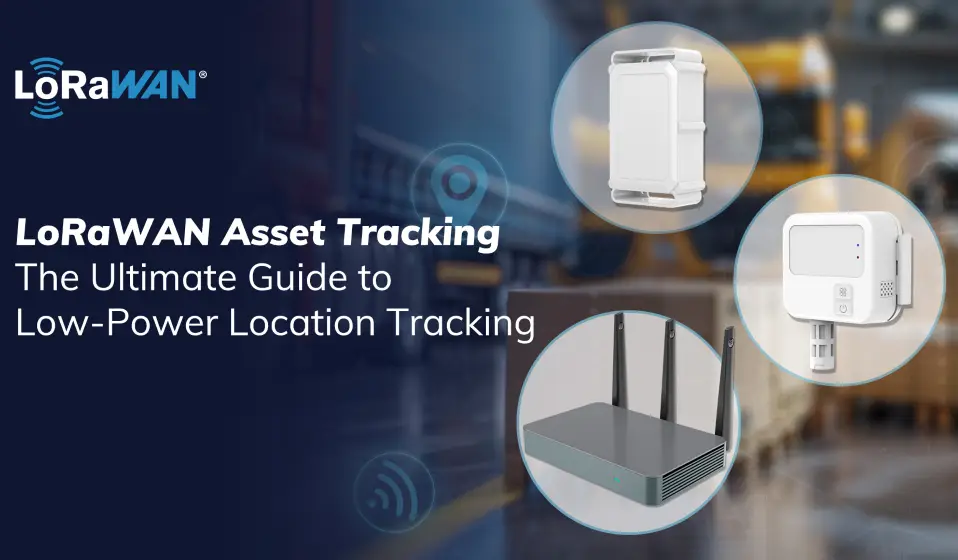
What is LoRaWAN Asset Tracking?
LoRaWAN stands for “Long Range Wide Area Network.” It’s a communication protocol built for IoT. It sends small packets of data between devices and a central server using minimal power. Asset tracking means keeping tabs on valuable items—tools, vehicles, containers, machines. Whether they’re across the street or across the country, LoRaWAN asset tracking provides reliable updates. A LoRaWAN asset tracker is a small device—often with GPS—that attaches to an asset and sends data regularly over long distances. Unlike traditional tracking systems, it doesn’t drain battery quickly. That means fewer replacements and longer-lasting performance. LoRaWAN networks are easy to scale, which allows businesses start small and grow big—without overhauling their setup.
The Need for LoRaWAN Asset Tracking
Asset tracking helps companies know where their assets are, what condition they are in, and if they are working well. This helps lower the chance of losing items and makes daily work smoother. Traditional tracking systems, such as RFID, have limitations in terms of range, power consumption, and scalability. LoRaWAN is a top choice when companies require a tracking solution to operate across kilometers for years.
Features of LoRaWAN Asset Tracking
Ultra-Low Power Consumption
LoRaWAN is specifically designed to consume minimal power. Devices using LoRaWAN can operate for years on a single battery, making it an ideal solution for remote and hard-to-reach assets.
Long Range
LoRaWAN covers several kilometers in cities. In open rural areas, it can reach up to 15 kilometers. This makes it ideal for wide-area tracking—like farms, factories, and logistics networks.
Real-time Tracking
With LoRaWAN, businesses get instant access to location data. When an asset moves or stops, the system knows. This visibility supports quick decisions and reduces operational blind spots.
Easy to Scale
LoRaWAN systems are inherently scalable, allowing businesses to expand their asset tracking networks with minimal effort. As the business grows, additional devices and gateways can be added without significant infrastructure changes, making it a cost-effective solution for long-term growth.
How LoRaWAN Asset Tracking Works
Step 1: Sensing & Data Collection
Each tracked item has a tag. That tag collects data—like its GPS location, movement, temperature, or other environmental conditions.
Step 2: LoRa Signal Transmission
The tag sends this data using LoRa signals. These low-power signals travel to nearby LoRaWAN gateways.
Step 3: Gateway Reception & Data Forwarding
Gateways pick up the LoRa signal and forward it to a network server. The data travels through secure channels and lands on your company’s central system.
Step 4: Network Server Processing
The network server routes, filters, and processes the data. It then sends it to your application server for final use.
Step 5: Application Server Processing
Your application server analyzes the data and displays it on a dashboard. From here, your team sees asset locations, status, and any alerts. You can also automate actions—like sending notifications if an asset moves unexpectedly.
What Industries Benefit from LoRaWAN Asset Tracking
LoRaWAN tracking isn’t just for one type of business. It’s used across many industries where visibility and reliability matter.
Logistics & Supply Chain – Track shipments from origin to destination. Reduce theft, delays, or misplaced goods. LoRaWAN helps keep your delivery promises.
Construction – In construction, LoRaWAN can track tools, machinery, and materials, ensuring that they are used efficiently and returned on time, preventing losses and delays.
Manufacturing – Track the movement of machines or parts. Monitor maintenance schedules and keep equipment running efficiently.
Agriculture – LoRaWAN helps farmers monitor irrigation systems, livestock, and machinery, improving productivity and resource management.
Healthcare – Hospitals track medical equipment, monitors, and even medication storage. It improves patient safety and streamlines operations.
Utilities & Infrastructure – Track remote meters, sensors, or pipes. Get early alerts before a failure happens. It’s ideal for water, gas, and energy networks.
Smart Cities – Integrate LoRaWAN technology into urban management systems, such as waste management, public transportation, and environmental monitoring, to create more efficient, sustainable urban spaces.
Alternative Technologies for Asset Tracking
GPS/Cellular
GPS is accurate but power-hungry and better to be deployed in outdoor tracking. Cellular networks offer broad coverage but cost more and drain batteries faster. Better for vehicles than small assets.
Bluetooth Low Energy (BLE)
BLE is useful for short-range asset tracking, particularly in indoor environments. However, it lacks the long-range capabilities of LoRaWAN and typically requires more frequent maintenance.
Wi-Fi
Wi-Fi tracking only works where there’s strong signal coverage. It’s also not ideal for battery-powered devices and doesn’t scale well outdoors.
Get Started With Minew LoRaWAN Asset Tracking
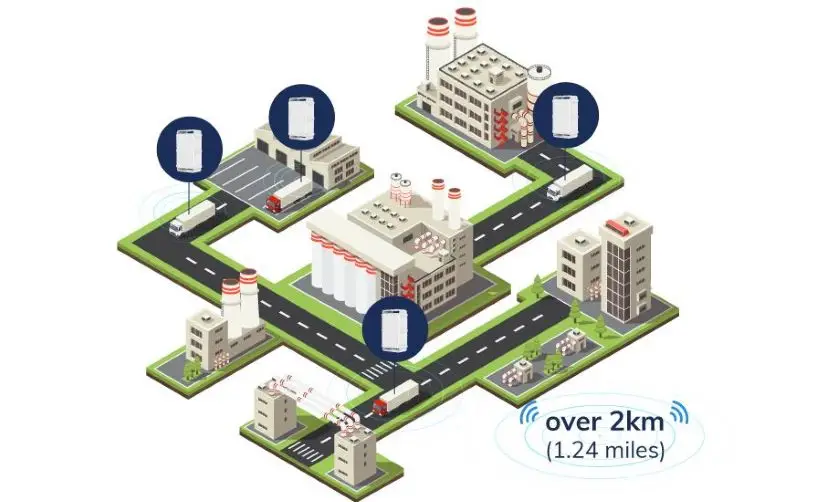
Minew gives businesses a reliable and low-cost way to track assets using LoRaWAN. Our GPS tracker uses the LoRaWAN protocol to track over long distances (up to 2 km). It has a built-in accelerometer sensor that sends alerts when a shipment moves or stops. The device is simple to set up and works well with systems you already use. It also allows you to grow and adjust the system as your business changes.
Conclusion: Unlocking Value with LoRaWAN Asset Tracking
LoRaWAN helps improve asset tracking by using low power, covering long distances, and giving real-time updates. It works well in many types of businesses. As more companies use IoT and automation, LoRaWAN helps save money, improve work efficiency, and make better choices, giving more value to your business.

 Chat now