Blog & Guide
IoT Insights and Updates from Minew.
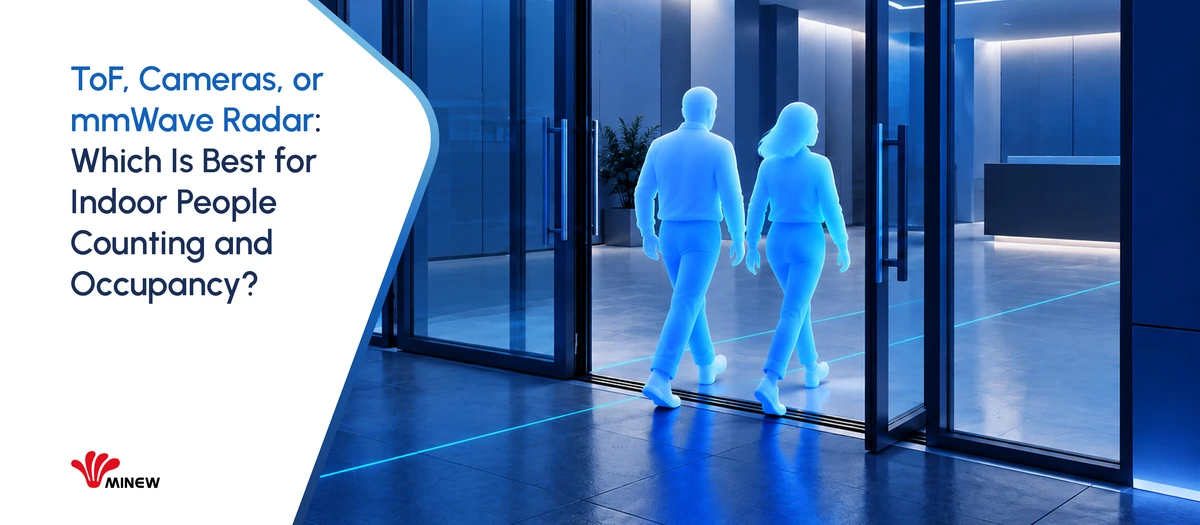
Accurate indoor people counting is vital for smart buildings, space optimization, and energy efficiency. This article evaluates three leading technology solutions: ToF sensors, traditional AI cameras, and millimeter-wave radar. Comparing working principles, privacy compliance, counting accuracy, and environmental adaptability reveals that ToF technology stands out as the optimal choice.

Explore how IoT hardware, such as GPS trackers, smart sensors, and fleet telematics, optimizes last-mile logistics, enabling real-time tracking.
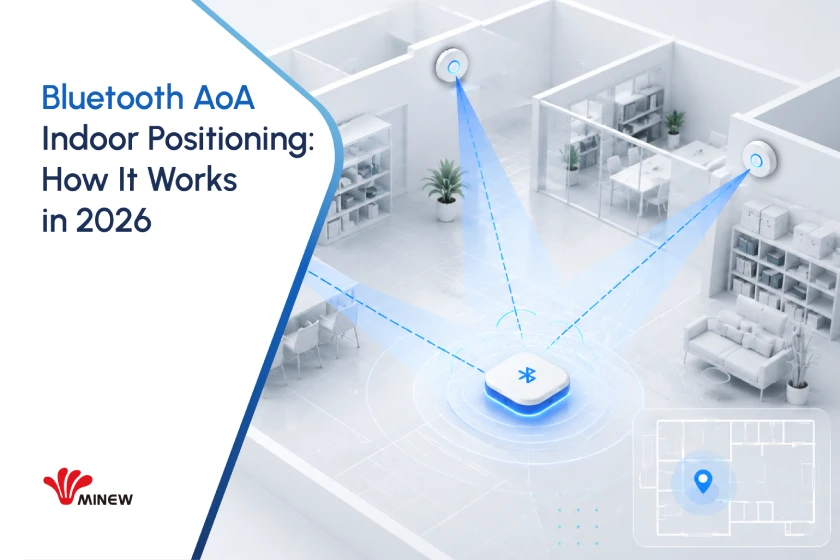
Learn how Bluetooth Angle of Arrival positioning works, how it compares with UWB and other indoor location technologies, and how to plan a reliable deployment.
Dive deep into how IoT container tracking revolutionizes global supply chains with real-time data, smart sensors, and multi-connectivity.

From smart space management to employee wellness monitoring, learn how Internet of Things (IoT) hardware is revolutionizing workplace experience.

The World Cup shows how far connected technology has moved into the physical world.

Discover how Hubble Network is revolutionizing global asset tracking. Learn about its gateway-free GNSS positioning, key benefits, and real-world IoT applications.
Discover how solar powered GPS trackers provide real-time monitoring without battery swaps. Explore 2026 technology trends, ROI, and top-rated models.
Discover how IoT solutions are revolutionizing ESG reporting and sustainability. Leverage real-time data for environmental, social, and governance excellence.
The Bluetooth SIG has released the Bluetooth 6.3 specification! This article summarizes four core updates. Come check these out.
Wondering if the product is the right one for your business? Chat with real people.
 Chat now
Email
Chat now
Email