Blog & Guide
IoT Insights and Updates from Minew.
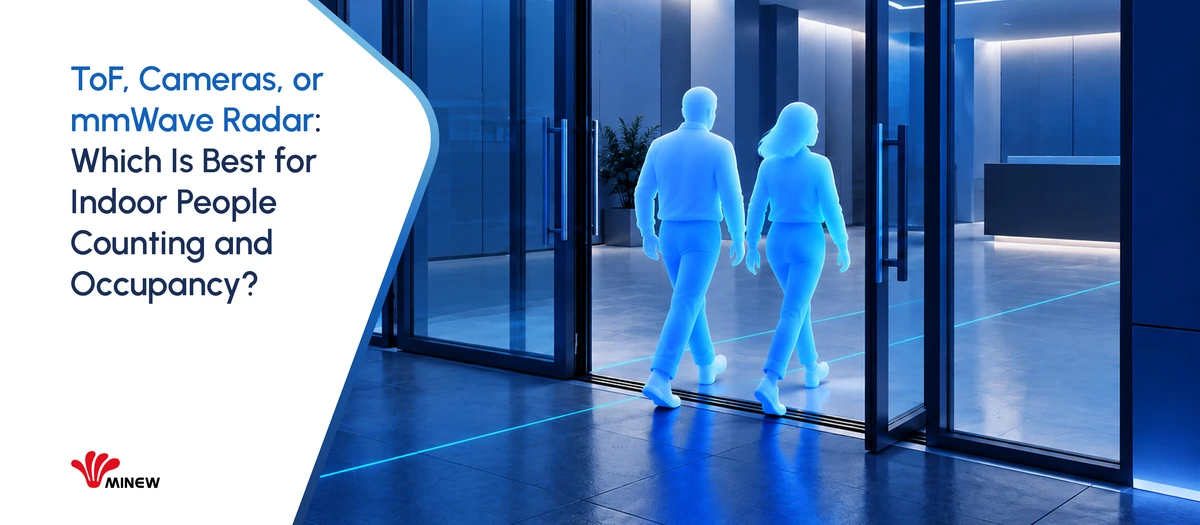
Accurate indoor people counting is vital for smart buildings, space optimization, and energy efficiency. This article evaluates three leading technology solutions: ToF sensors, traditional AI cameras, and millimeter-wave radar. Comparing working principles, privacy compliance, counting accuracy, and environmental adaptability reveals that ToF technology stands out as the optimal choice.

Explore the key steps and best practices for IoT implementation. Learn about the challenges, technologies, and strategies of IoT in various industries.
Learn how Real-Time Location Systems (RTLS) work. Compare RSSI, AoA, TDoA & Bluetooth Channel Sounding with practical deployment examples.

Discover the power of Ethernet Gateways. Learn how they optimize data flow, enhance IoT connectivity, and support industrial applications. Know it now!

Discover the differences between LoRaWAN vs Zigbee, including range, consumption, and use cases. Explore which technology is better suited for IoT applications.

Discover 7 IoT communication protocols that drive innovation and improve connectivity for IoT devices. Learn how these protocols transform your IoT projects

Discover how IoT technology can ensure workplace safety. Learn 5 tips, including real-time monitoring and more to protect employees and improve compliance.

Explore the differences between Angle of Arrival (AoA) and Channel Sounding. Learn how each technique impacts signal detection and system performance.

Discover the differences between BLE and RFID technologies. Learn their applications, advantages, and how to choose the best solution for your needs.

Smart logistics solutions provide retailers or decision-makers with opportunities to serve their customers better in this heightened expectation era.
Wondering if the product is the right one for your business? Chat with real people.
 Chat now
Email
Chat now
Email