



会議室は予約されていても、実際には誰もいないことがあります。また、混雑した入口では、2人が同時に通り過ぎても、単純な光電センサーでは1人しか検知されない場合があります。どちらの状況も、より正確な情報が必要ですが、求められる測定方法は異なります。あるチームには、そのスペースが使用中かどうかを知る必要があります。別のチームには、出入りする人の数を確実に把握することが求められます。.
センサーを選ぶ際には、その違いが重要になります。. 飛行時間型センサー (ToFセンサー)、カメラ、および ミリ波レーダーセンサー これらはすべて、屋内の人数把握プロジェクトに貢献できます。それぞれが異なる種類の情報を収集しており、その結果はデバイス、その設置場所、およびその背後にある集計方法によって異なります。.
各技術がどのように人を感知するか
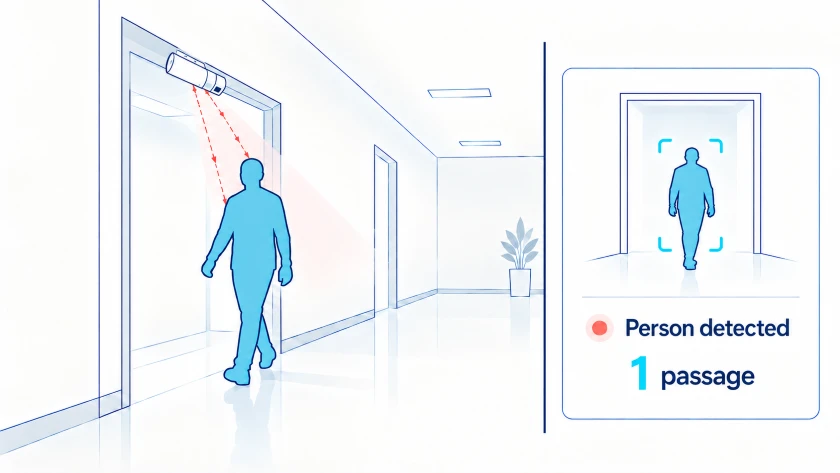
ToFは赤外線を用いて距離を測定します
ToFセンサーは、空間に赤外線を照射し、その反射光を測定することで距離を推定します。直接式ToFは伝播時間を測定し、間接式ToFは変調光の位相シフトを利用します。単一点センサーは、1つの検知領域内の距離を報告します。 マルチゾーンセンサーでは、各ピクセルまたはゾーンがそれぞれの距離を報告し、視野内の物体の深度マップを作成します。このマップは、従来のカラー画像を撮影したり、そこから深度を再構築したりすることなく、位置や形状を提供し、従来の受動型赤外線検出器よりもはるかに正確な空間的コンテキストを提供します(詳細については ToFとPIRの違い).
ToFは独自の赤外線を照射するため、追加の可視光照明がなくても、暗い廊下や入り口などで測定を行うことができます。これにより、追加の照明を設置することが現実的でない屋内エリアでの設置が簡素化されます。ただし、直射日光を含む強い周囲の赤外線は、一部のデバイスの有効測定範囲を狭める可能性があるため、設置場所の選定が重要です。.
カメラはソフトウェアを使って画像を数値に変換する
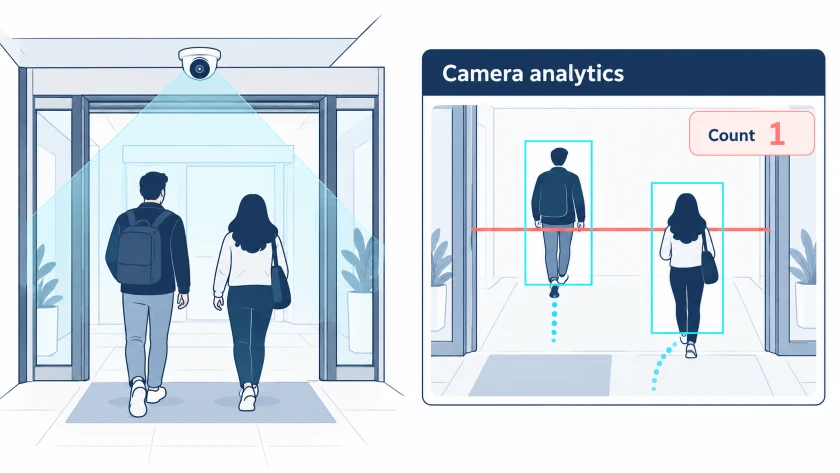
従来のカメラは2次元の画像を撮影し、ソフトウェアがその画像をカウント値に変換する必要があります。YOLOなどの物体検出器は、各フレーム内の人物を検出します。Deep SORTなどのトラッカーは、時間軸に沿ってそれらの検出結果を関連付け、システムが定義されたラインの横断回数をカウントしたり、あるエリア内に残っている人数を推定したりできるようにします。.
こうした視覚的な詳細は、チームが動きや混雑状況、転倒などの映像や分析を必要とする際に役立ちます。単に人数や占有状況を報告するだけの業務であっても、照明、映像の重複、画像へのアクセス、保存期間など、考慮すべき点がさらに増えます。 エッジAIにより、送信または保存される動画の量を削減できますが、カメラは依然として画像を撮影し、デバイス上で処理を行います。その価値は、追加の視覚情報が実際に活用される場面で最も発揮されます。.
ミリ波レーダーは反射した電波を検知する
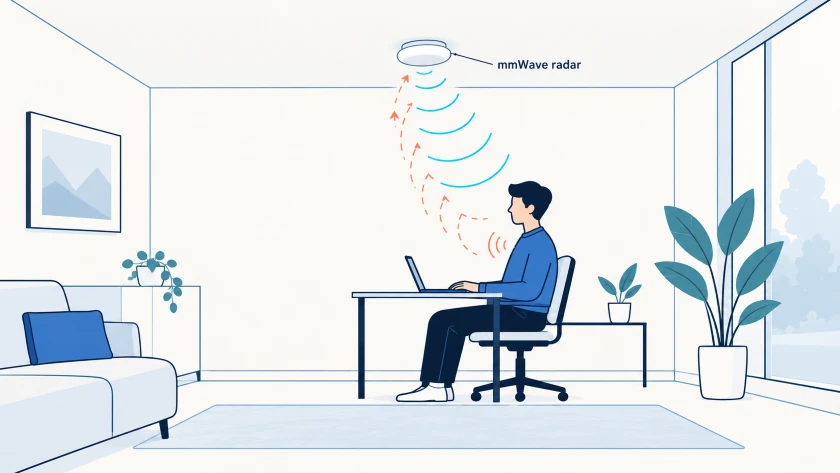
ミリ波レーダー 30~300 GHzの周波数帯で動作する。反射信号を分析して、人の位置や動きを推定する。つまり、タイミングから距離を算出し、ドップラー効果の変化から半径方向の速度を把握し、アンテナ処理によって角度情報を追加する。その結果得られる点群や検出されたターゲットは、従来の画像を記録することなく、空間情報や動作データを提供する。.
レーダーは可視光を使用せずに動作し、適切な処理を施すことで、座っている人が基本的な動作センサーからは静止しているように見えても、呼吸などの微細な動きを検知することができます。専用のシステムでは、心拍に伴う胸部の動きを検知できるほか、介護現場では転倒を監視するシステムもあります。 一部のレーダー機器は、特定のプラスチック、木材、ガラス、乾式壁などの適切な非金属素材の背後でも機能します。.
屋内在室状況モニタリングにおけるプライバシー
部屋や個室が使用中かどうかを知るだけでよい場合、ToFやレーダーを利用すれば、顔や服装、映像を特定できる形で記録することなく、その情報を得ることができます。このように限定された出力情報は、オフィス、更衣室、トイレなどで特に役立ちます。 映像の記録や視覚的な分析が必要な場面では、カメラは依然として有用ですが、本来シンプルな占有状況の把握ワークフローに、画像処理という工程が追加されることになります。.
この違いは導入後も続きます。ローカル処理や迅速な削除によって保存される映像の量を減らすことはできますが、カメラは依然として映像を撮影し続けるため、アクセスや保存期間に関する明確なルールが必要です。ToFやレーダーを活用することで、チームは「占有中か空いているか」といった運用上の課題に直結した情報を取得し、それらの記録の保存期間を制限することができます。このアプローチは、データ最小化および保存に関するGDPRの原則を支持するものです。.
交通量が多い入口で、F、カメラ、レーダーがどのように対応するか
混雑した出入り口では、人々が並んで通り過ぎたり、互いにすぐ後ろについて歩いたりすることがあります。 マルチゾーンToFシステムは、カウント用ソフトウェアに奥行きや高さの情報を提供し、平面画像上で輪郭が重なっている人々を区別するのに役立ちます。適切な解像度があれば、これらの情報によって、人とカートを区別したり、子供を見逃すことを防いだりすることも可能です。ただし、設置高さとカバー範囲については、センサーから通路がはっきりと見えるようにする必要があります。.
カメラは、映像が安定しており、適切な照明があれば、正確に人数をカウントすることも可能です。逆光が強い入り口や、車両が密集している交通状況では、フレームごとに一貫して人物を検出することが難しくなる場合があります。そのような場面では、カメラアングルの変更、追加の照明、あるいはソフトウェアの調整が必要になることがあります。.
レーダーは可視光の変化を感知し続け、光学的な視認が困難な煙や粉塵の多い環境でも動作可能です。人通りの多い入口では、人数計測用に設計されたレーダーシステムが、距離分解能と角度分解能を組み合わせることで、同時に通過する人々を区別することができます。.
ToF、カメラ、mmWaveレーダーの比較
| 考察 | ToFセンサー | 従来のカメラ | ミリ波レーダー |
| 仕組み | 赤外線が物体表面から反射して戻ってくることで、距離を測定します。. | 画像を分析して人物を検出し、横断回数をカウントします。. | 反射した電波から、距離、速度、角度がわかる。. |
| データ出力 | 単一点センサーによる距離測定値、または多ゾーンセンサーによる深度マップ。. | 2D画像または動画。. | 距離、速度、角度。処理されたデータには点群が含まれる場合があります。. |
| プライバシー | 認識可能な映像を録画することなく、距離や深度を報告します。. | 人物が特定される可能性があり、取り扱いには細心の注意を要する画像を撮影します。. | 認識可能な映像を記録することなく、動きと位置情報を報告します。. |
| 人頭数 | 解像度と設置位置が出入り口に適していれば、マルチゾーン深度機能により、近くにいる人々を区別しやすくなります。. | 視界が良好で適切なソフトウェアがあれば、正確にカウントできます。照明や遮蔽の状況が影響します。. | 専用システムでは複数の人物をカウントできますが、近接した対象の識別については検証が必要です。. |
| Lighting | Works without visible light; strong ambient infrared may reduce range. | A standard camera needs suitable light or additional low-light equipment. | Works independently of visible light. |
| Site interference | Shadows have little effect, but sunlight and blocked views can interfere. | Glare, shadows, and blocked views can affect detection. | Can operate in some dusty or smoky settings; clutter and mounting materials still matter. |
| Spatial detail | Multi-zone models provide sampled depth; single-point models do not map a scene. | A standard camera is 2D; stereo or depth cameras can provide depth. | Some systems produce 3D point clouds if they also measure elevation. |
| Processing | Counts still require software to distinguish people and determine crossing direction. | Image detection, crossing analysis, and video handling need processing. | Signal processing and counting multiple people require computing resources. |
| Mounting | Ceiling mounting can cover a defined area when range and field of view fit. | Needs an unobstructed view and suitable lighting. | Can sit behind a tested nonmetallic cover if coverage remains adequate. |
| Typical uses | Desk or stall occupancy; entrance counts with a suitable multi-zone system. | Security footage, visual analysis, and entrance counts. | Presence sensing, discreet installations, and dedicated people counting or fall monitoring. |
Match the Tech to the Use Case
Offices. ToF can report whether a desk, seat, or defined meeting area is occupied without capturing video. That simple signal helps facilities teams identify unused reservations and plan space use. When connected to suitable building controls, it can also inform lighting and heating or cooling schedules.
Retail. At an entrance, a multi-zone ToF system built for counting can use depth to help distinguish visitors passing close together without recording their images. Foot traffic trends can inform staffing, while area occupancy trends can guide display and product placement decisions if sensors cover the relevant area. A fitting room may need only a private occupied or available signal.
Public spaces. Libraries, stations, and exhibition venues can use entrance counts and area occupancy to identify demand and crowded periods. Multi-zone ToF or radar systems designed for counting can provide these measurements without a continuous video feed or visible lighting.
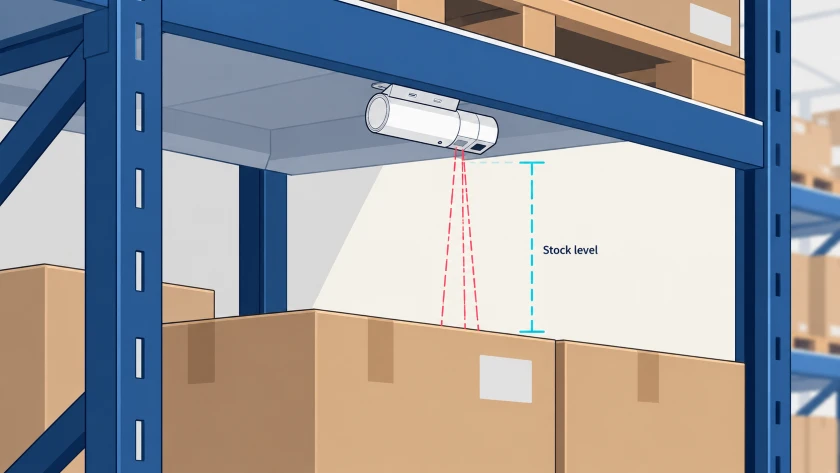
Industry and warehouses. ToF distance sensing can monitor shelf and stock levels, proximity, or activity in a defined zone. Radar can help where airborne dust or a discreet mounting position makes an optical view impractical. Forklift collision warnings and production line safety functions need purpose-built systems and validation.
Cameras are the better fit when security footage, visual behavior analysis, or customer insights from images are needed. Purpose-built mmWave radar systems suit presence sensing, fall monitoring in care settings, and discreet mounting. For indoor entrances that need reliable counts without recognizable images, a well-positioned multi-zone ToF system is a strong first option, balancing depth detail, privacy, and operation without visible light. The best choice still depends on the required output and a test at the actual site.
How to Choose an Indoor People Counting System
Choose the output first: occupied status, entrance counts, a live headcount, movement data, or footage. Then weigh privacy, site conditions, counting errors, and total cost.
1. Start with privacy
In restrooms, changing areas, and similar spaces, ToF or mmWave can report occupancy without recognizable footage. Choose a camera where images are necessary for security or visual analysis and appropriate to capture. For every system, define who can access the data and when it is deleted.
2. Check lighting and installation
ToF and radar need no visible light, making them useful at dim or backlit entrances. Multi-zone ToF suits a defined passage if its range, field of view, and placement cover people walking close together; strong ambient infrared and blocked views still need checking. Radar can work behind suitable nonmetallic covers or where dust hinders an optical view, but placement matters. Cameras also need a suitable view and illumination, although specialized systems can handle challenging scenes. If doorway counts determine occupancy in a large space, cover every entrance and exit.
3. Define the accuracy you need
Distance accuracy is not people-counting accuracy. Multi-zone ToF depth helps counting software distinguish close walkers, while dedicated radar and camera systems can also count several people. Radar is useful when small movements matter more than a count. Set acceptable missed and false count rates, then test with close followers, children, carts, and stationary occupants where relevant.
4. Compare total cost
Compare hardware, installation, power, software, processing, storage, maintenance, and integration with a building or retail system. ToF depth data can avoid video storage when the job needs only a count or occupancy signal. Overall cost still depends on coverage and the software needed, so compare systems against the same output and accuracy targets.
For an indoor entrance that needs reliable counts without identifiable images, a purpose-built multi-zone ToF system is a strong starting point. Compare its results with checked manual counts during peak traffic before a wider rollout.
 今すぐチャット