


ハイブリッド従業員は週に 2 ~ 3 日しかオフィスに来ない場合があります. 彼らが到着したら, 彼らは基本が機能することを期待しています.
彼らは机を見つけたいと思っています. 彼らはまだ使用されていない会議室を望んでいます. 古さを感じさせない空気を求めている. 5 人に尋ねずに共有機器を見つけたいと考えている. 彼らは大きな建物の中で安全を感じたいと考えています. 彼らはオフィスで一日を楽にしたいと考えています, 遅くない.
だからこそ職場体験がビジネス上の問題となっている, 施設の話だけではない. CBREの 2026 職場調査 からのクライアントデータをカバーします 303 100万平方フィートのオフィススペースと、企業が依然として不動産の調整をどのように行っているかを示しています, 操作, ハイブリッドワークに関する文化. JLL 2026 占有レポート 世界のオフィス利用率が上昇したと言う 56%, から上がって 54% で 2025 そして 49% で 2024.
メッセージは明確です. オフィススペースは新たな活動を見せている, しかし、従業員の期待と使用パターンは変化しました. 従業員は目的を持って入社する. 彼らはオフィスが会議をサポートすることを期待しています, 集中, 学ぶ, チームワーク, そして幸福. IoT は職場の推測を職場の証拠に変えるので役立ちます.
職場体験を解読する: スマートオフィスの中核
職場体験とは何ですか? 平易な英語で, それは従業員がスペースを通じて仕事を体験する方法です, ツール, サービス, そして彼らの周りの相互作用.
スマートなオフィスにはもう 1 つのレイヤーが追加されます: リアルタイムの認識.
アンケートやバッジのスワイプだけからオフィスを計画するのではなく, チームはIoTデータを使用して今何が起こっているかを確認できます. どのスペースが埋まっているかを知ることができます, どの部屋が空いているのか, 人々が自分の道を見つけるのに苦労している場所, 環境の快適さに注意が必要な場合.
| 職場レイヤー | 従業員が気づいたこと | 測定またはサポートできること |
| 空間 | “机か部屋を見つけられますか?” | 占有率, デスクでの使用, 部屋の利用, 人の流れ |
| 快適 | “ここは働きやすいです?” | 温度, 湿度, ライト, CO2, Vocs, 空気の質 |
| 安全性 | “何か起こった場合に助けてもらえますか?” | パニック警報, ロケーションバッジ, 緊急時の測位 |
| 生産性 | 「必要なものは見つかるかな?」?” | 資産の場所, 設備の状態, 利用履歴 |
| 運営 | 「オフィスはスムーズに動いていますか?」? | メンテナンス信号, エネルギーの使用, 清掃需要 |
職場体験プログラムでは目に見えないものは改善できないため、これは重要です. 従業員のフィードバックから人々がどのように感じているかがわかります. IoT データは建物が何をしているかを示します.
両方を一緒に使用すると最良の結果が得られます.
IoT が職場体験にとってより重要である理由 2026
フロアプランからは見えないオフィスの問題の多く.
会議室は空いているように見えても、6 人が 1 時間座っていると息苦しく感じます。. コラボエリアが人気になりそう, しかし、センサーデータは、それが火曜日にのみ使用されていることを示している可能性があります. 共有プリンターは「床のどこか」にある可能性があります,” しかし、従業員は依然としてそれを探して時間を無駄にしています. 施設チームがすべての部屋を同じスケジュールで清掃する場合があります, その日は半分も使われなかったとしても.
IoTハードウェア これらのギャップを埋めるのに役立ちます.
一般的なスマート ワークプレイス システムは、占有状況の監視などのユースケースをサポートします, 資産管理, 屋内ナビゲーション, 会議室探し, エネルギー効率, スマートルーム, スペース利用率, そしてスマートデスク. 占有システムは、次のようなテクノロジーから宇宙利用信号を収集します。 PIRセンサー, ToFセンサー, そして ミリ波センサー. その後、プラットフォームはこれらの信号をリアルタイムおよび過去の占有状況に関する洞察に変換します。.
それが本当のシフトです. オフィスはフィードバックシステムになる.
7 IoT ハードウェアが職場体験を向上させる主な方法
1. インテリジェントなスペース管理
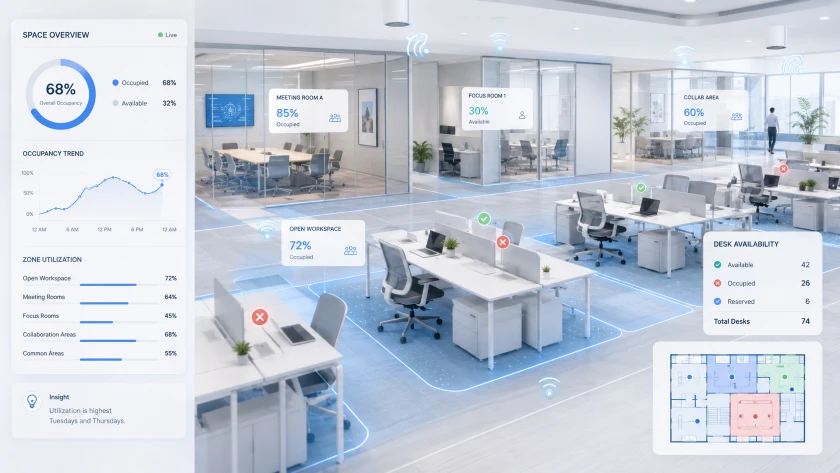
ハイブリッドワークによりスペース計画が難しくなっている. 静かな日もある. 他の日はオーバーフロー. あるチームにはフォーカス ルームが必要な場合があります, 一方、別のゾーンではプロジェクトゾーンが必要です.
人感センサー, 存在センサー, BLEビーコン, スマートバッジの位置データ, 人数カウント装置はスペースが実際にどのように使用されているかを示します.
これはチームに役立ちます:
• 使われていないデスクを便利な部屋に変える
• 広い部屋が悪用されている場合は、小さな会議室を追加します。
• 実際の使用状況に基づいて洗浄を調整する
• 空きゾーンでのエネルギー使用量を削減する
• 実際のデータを使用してリースを計画する
これは職場体験を改善する方法に対する 1 つの明確な答えです: オフィスを実際の行動と一致させる.
2. スマートなナビゲーションと道案内
大規模なオフィスやキャンパスは移動が困難な場合があります. 新入社員, 訪問者, 従業員は部屋を探すのに時間を失うことがよくあります, 机, またはサービスエリア.
屋内ナビゲーション技術 人々を会議室に案内できる, 机, 食堂, 印刷ゾーン, トレーニングルーム, 訪問者のチェックインポイント, そして非常口.
従業員向け, これはストレスを取り除きます. 管理者向け, 遅延が減り、日常の流れが改善されます.
3. スマート照明, 温度, 湿度と
快適さは人々の感じ方や働き方に影響を与えます.
空気質センサーは温度を追跡できます, 湿度, 点灯, そして部屋の利用. 建物システムは、占有率と日光に基づいて照明と HVAC を調整できます。.
米国. EPAは室内の快適さは温度に影響されると指摘, 空気の動き, まぶしさ, ノイズ, 臭い, およびその他の構築要素. OSHAは室内空気の質の悪さと頭痛を関連付けています, 倦怠感, そして集中力の低下.
IoT により、チームは苦情に対応するだけでなくパターンを把握できるため、快適性の管理が容易になります。.
4. 室内空気質モニタリング
従業員は空気の質の悪さを常に認識できるわけではありません, しかし彼らはそれを感じることができる.
IAQセンサー 追跡できる:
• CO₂
• 温度
• 湿度
• VOC
• 粒子状物質
• 換気の必要性
EPAは室内空気の質が健康に影響を与える可能性があると発表, 快適, 幸福, 生産性と. CDC のガイダンスでは、より健康的な屋内環境のために良好な換気の重要性も強調しています。.
職場チーム向け, IAQ は従業員信託の一部になりました. カレンダー上に空室があるからといって、その部屋を準備完了として扱うべきではありません。.
5. 資産の追跡と管理
プロトタイプのテストキットなどの共有機器の検索, ポータブルプロジェクター, または特殊なツールを使用すると何時間もの生産時間が無駄になります. 小型Bluetooth Low Energyの貼り付け (BLE) 企業ハードウェアへの資産タグにより、従業員は一元化されたダッシュボードを通じてアイテムがどこにあるかを正確に見つけることができます. これにより、在庫が正確に保たれ、必要なときにツールを利用できるようになります。.
6. 緊急避難およびリアルタイム位置情報システム
建物の重大な緊急事態時, 安全チームは人々がどこにいるかを正確に把握する必要がある. リアルタイム位置情報システムは、スマート バッジまたはウェアラブルを使用して、指定された集合ゾーン全体の占有人数を即時に提供します. これにより、初期対応者は見逃した場所を特定し、より迅速に調整できるようになります。, より安全な避難.
7. ビルシステムの予知保全
オフィスのエレベーターが故障したり、空調メインユニットが突然故障したりしたとき, 従業員の快適性は即座に低下します. IoT 振動センサーと温度センサーが建築の重機を 24 時間監視. 完全なシステム障害が発生する前に早期の摩耗の兆候を特定することにより、, メンテナンスチームは営業時間外に修理のスケジュールを設定できます, 従業員のダウンタイムゼロを保証.
IoT で職場体験を向上させる方法
スマート オフィス プロジェクトは、小規模に始めて目に見える問題を解決するときに最も効果を発揮します。.
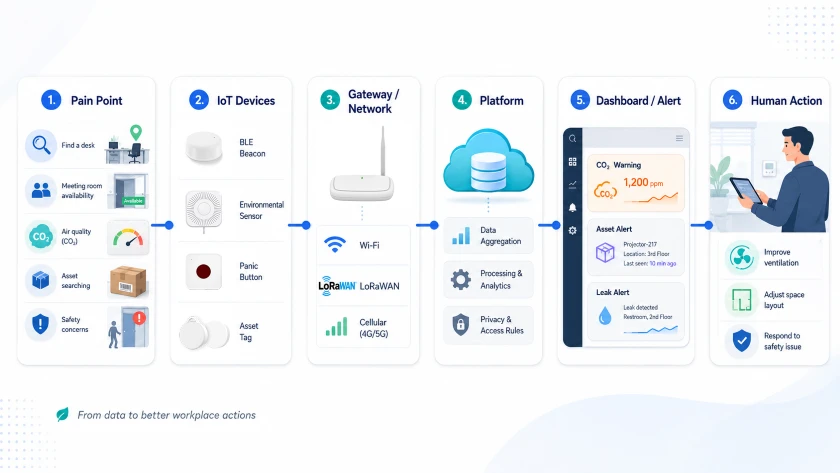
ステップ 1: 従業員の問題点を選択する
簡単な質問をする. デスクを探すのに苦労している人はいますか? 会議室の予約は難しいですか? 空気の質は不明ですか? 資産を見つけるのは難しいですか? 安全性は懸念されますか?
「センサーが必要です」ということから始めないでください。従業員の問題から始めましょう.
ステップ 2: データパスをマッピングする
すべての IoT システムには明確なフローが必要です:
デバイス → ゲートウェイまたはネットワーク → プラットフォーム → ダッシュボードまたはアラート → 人間のアクション
誰もデータに基づいて行動しない場合, システムはほとんど価値を付加しない.
ステップ 3: 適切なハードウェアを選択する
小規模オフィスには BLE ビーコンが必要な場合があります, ゲートウェイ, そして簡単なセンサー. 大規模なサイトには LoRaWAN が必要な場合があります, Wi-Fi, セルラー, または混合システム. プライバシーに注意が必要なエリアにはカメラを使用しないセンシングが必要な場合があります.
ステップ 4: プライバシールールを設定する
従業員は監視されていると感じるべきではありません.
どのようなデータを収集するかを定義する, 誰がそれを見ることができますか, どのくらいの期間保管されますか, そしてそれが個人に結びついているかどうか. 多くの場合, 集約されたデータで十分です.
ステップ 5: データを運用に結び付ける
ダッシュボードだけでは職場体験は向上しません. ワークフローが行うこと.
例えば:
• CO₂ が多い → 換気を増やす
• 使用していない部屋 → レイアウトを見直す
• アセットが承認済みゾーンを離れる → アラートを送信
• 漏れを検出 → メンテナンスを派遣
• パニックボタンが押された → 対応チームに通知
IoT はチームの次の行動を変えることで価値を生み出します.
Minnew で企業のワークスペースを最適化
スマートな職場は信頼性の高いハードウェアに依存します. センサーは正確なデータを収集する必要がある. タグは実際の資産に適合する必要があります. ゲートウェイは死角を減らす必要がある. デバイスは適切な範囲をサポートする必要がある, バッテリー寿命, サイズ, および接続.
Minew スマートスペース向けIoTハードウェアを提供, 資産管理, 環境センシング, 人材管理, 接続された操作. その製品範囲には資産トラッカーが含まれます, Bluetooth ビーコン, 人事タグ, センサー, リピーター, とゲートウェイ
.
Minenewはハードウェア設計もサポートします, 機械設計, 埋め込み設計, 高速プロトタイピング, 品質工学, 工場生産, ホワイトラベリング, 規制遵守と.
職場プロジェクトの場合, ミニューがサポートできるのは:
• デスクや部屋の占有検知
• BLE ビーコンベースの屋内ウェイファインディング
• 空気の質と快適性のモニタリング
• 共有機器の資産追跡
• 安全性と位置認識のための個人バッジ
• 緊急警報用の非常ボタン
• BLE 用ゲートウェイ, LoRaWAN, Wi-Fi, およびその他のIoTシステム
• システムインテグレーターおよびソリューションプロバイダー向けのカスタムハードウェア
企業の不動産チーム向け, Minnew ハードウェアはオフィスのパフォーマンスを測定可能にするのに役立ちます. システムインテグレーター向け, スマートな職場プラットフォームのデバイス層を提供します. 施設管理者向け, 操作が見やすくなり、実行しやすくなります。.
結論: 仕事の未来はインテリジェントに
~における強力な職場体験 2026 従業員がオフィスに入ることができることを意味します, 必要なものを見つける, 快適に過ごす, 安心してください, 遅延が少なく作業できる.
IoT は、空間から職場チームにライブ信号を提供することでこれを可能にします, 資産, そして建築条件.
最高のスマートオフィスはシンプルに感じられます. お部屋が見つけやすくなります. 機器を見つけやすくなります. 安全警告がより速くなります. 従業員が問題を感じる前にメンテナンスが行われます.
これが、IoT で職場体験を向上させる方法への実際的な方法です。: 勤務日から摩擦を取り除く, 現実の問題を一度に一つずつ.
より良い職場体験の構築について詳しくは, 推奨書籍を参照してください:
👉 職場のIoT: IoTがオフィス宇宙管理サービスを強化する方法?
 今すぐチャット