



يجوز للموظف المختلط زيارة المكتب يومين أو ثلاثة أيام فقط في الأسبوع. عند وصولهم, يتوقعون أن تعمل الأساسيات.
يريدون العثور على مكتب. إنهم يريدون غرفة اجتماعات لم يتم شغلها بالفعل. إنهم يريدون هواءًا لا يبدو قديمًا. إنهم يريدون تحديد موقع المعدات المشتركة دون سؤال خمسة أشخاص. يريدون أن يشعروا بالأمان في مبنى كبير. إنهم يريدون أن يجعل المكتب يومهم أسهل, ليس أبطأ.
ولهذا السبب أصبحت الخبرة في مكان العمل قضية تجارية, ليس مجرد موضوع المرافق. سي بي آر إي 2026 أبحاث مكان العمل يغطي بيانات العميل من 303 مليون قدم مربع من المساحات المكتبية ويظهر كيف لا تزال الشركات تقوم بتعديل عقاراتها, العمليات, والثقافة حول العمل المختلط. جيه إل إل 2026 تقرير الإشغال يقول أن استخدام المكاتب العالمية ارتفع إلى 56%, من 54% في 2025 و 49% في 2024.
الرسالة واضحة. تشهد المساحات المكتبية نشاطًا متجددًا, لكن توقعات الموظفين وأنماط الاستخدام تغيرت. يأتي الموظفون بغرض. ويتوقعون أن يدعم المكتب الاجتماعات, ركز, تعلُّم, العمل الجماعي, والرفاهية. يساعد إنترنت الأشياء لأنه يحول التخمين في مكان العمل إلى دليل في مكان العمل.
فك رموز الخبرة في مكان العمل: جوهر المكاتب الذكية
ما هي الخبرة في مكان العمل? باللغة الإنجليزية البسيطة, إنها الطريقة التي يختبر بها الموظفون العمل من خلال المساحات, أدوات, خدمات, والتفاعلات من حولهم.
يضيف المكتب الذكي طبقة أخرى: الوعي في الوقت الحقيقي.
بدلاً من تخطيط المكتب فقط من خلال الاستطلاعات أو تمرير الشارات, يمكن للفرق استخدام بيانات إنترنت الأشياء لمعرفة ما يحدث الآن. يمكنهم معرفة المساحات الممتلئة, أي الغرف تجلس فارغة, حيث يكافح الناس للعثور على طريقهم, وحيث تحتاج الراحة البيئية إلى الاهتمام.
| طبقة مكان العمل | ما يلاحظه الموظفون | ما الذي يمكن قياسه أو دعمه؟ |
| فضاء | “هل يمكنني العثور على مكتب أو غرفة?” | الإشغال, استخدام المكتب, استخدام الغرفة, تدفق الناس |
| راحة | “هل هذا المكان سهل العمل فيه?” | درجة حرارة, رطوبة, ضوء, شركة2, المركبات العضوية المتطايرة, جودة الهواء |
| أمان | “هل يمكنني الحصول على المساعدة إذا حدث شيء ما?” | تنبيهات الذعر, شارات الموقع, تحديد المواقع في حالات الطوارئ |
| إنتاجية | "هل يمكنني العثور على ما أحتاج إليه?” | موقع الأصول, حالة المعدات, تاريخ الاستخدام |
| العمليات | "هل يعمل المكتب بسلاسة? | إشارات الصيانة, استخدام الطاقة, الطلب على التنظيف |
وهذا أمر مهم لأن برنامج الخبرة في مكان العمل لا يمكنه تحسين ما لا يمكنه رؤيته. تخبرك تعليقات الموظفين بما يشعر به الناس. تُظهر بيانات إنترنت الأشياء ما يفعله المبنى.
أفضل النتائج تأتي عندما يتم استخدام كلاهما معًا.
لماذا يعتبر إنترنت الأشياء أكثر أهمية للتجربة في مكان العمل 2026
العديد من مشاكل المكتب غير مرئية من مخطط الأرضية.
قد تبدو غرفة الاجتماعات متاحة ولكنها تشعر بالاختناق بعد جلوس ستة أشخاص فيها لمدة ساعة. قد تبدو منطقة التعاون شائعة, لكن بيانات المستشعر قد تظهر أنه يستخدم في أيام الثلاثاء فقط. قد تكون الطابعة المشتركة "في مكان ما على الأرض,"لكن الموظفين ما زالوا يضيعون الوقت في البحث عنه. يجوز لفريق المنشأة تنظيف كل غرفة وفقًا لنفس الجدول الزمني, حتى عندما لم يتم استخدام نصفهم في ذلك اليوم.
أجهزة إنترنت الأشياء يساعد على سد هذه الفجوات.
تدعم أنظمة أماكن العمل الذكية الشائعة حالات الاستخدام مثل مراقبة الإشغال, تتبع الأصول, الملاحة الداخلية, العثور على غرفة الاجتماعات, كفاءة الطاقة, غرف ذكية, استغلال المساحة, والمكاتب الذكية. تقوم أنظمة الإشغال بجمع إشارات استخدام الفضاء من تقنيات مثل أجهزة استشعار PIR, أجهزة استشعار ToF, و أجهزة الاستشعار mmWave. تقوم المنصة بعد ذلك بتحويل هذه الإشارات إلى رؤى إشغال تاريخية وتاريخية.
هذا هو التحول الحقيقي. يصبح المكتب نظام ردود الفعل.
7 الطرق الرئيسية التي تعمل بها أجهزة إنترنت الأشياء على تحسين تجربة مكان العمل
1. إدارة الفضاء الذكية
لقد جعل العمل المختلط تخطيط المساحة أكثر صعوبة. بعض الأيام هادئة. أيام أخرى تفيض. قد يحتاج فريق واحد إلى غرف التركيز, بينما يحتاج آخر إلى مناطق المشروع.
أجهزة استشعار الإشغال, أجهزة استشعار الوجود, منارات بليه, بيانات موقع الشارة الذكية, وتظهر أجهزة عد الأشخاص كيفية استخدام المساحات فعليًا.
وهذا يساعد الفرق:
• تحويل المكاتب غير المستخدمة إلى غرف مفيدة
• إضافة غرف اجتماعات صغيرة عند إساءة استخدام الغرف الكبيرة
• ضبط التنظيف على أساس الاستخدام الحقيقي
• تقليل استخدام الطاقة في المناطق الفارغة
• خطة عقود الإيجار مع البيانات الحقيقية
هذه إجابة واضحة لكيفية تحسين تجربة مكان العمل: جعل المكتب يتوافق مع السلوك الحقيقي.
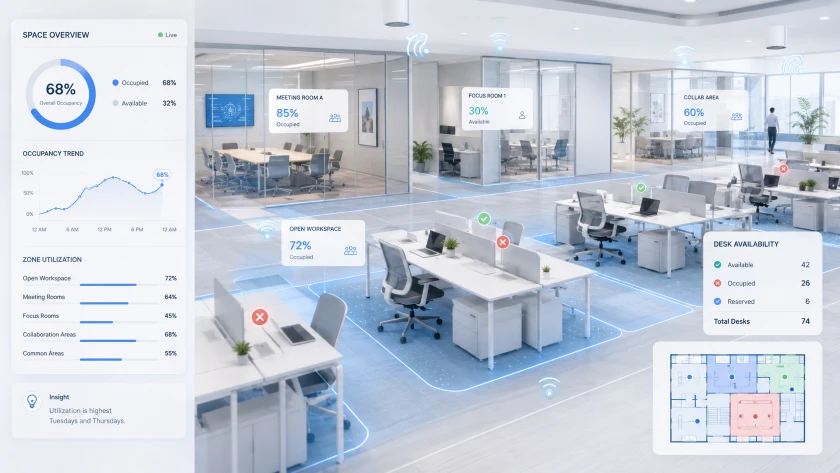
2. الملاحة الذكية وإيجاد الطريق
قد يكون من الصعب التنقل عبر المكاتب والحرم الجامعي الكبيرة. تعيينات جديدة, الزوار, وغالبًا ما يضيع الموظفون الوقت في العثور على الغرف, مكاتب, أو مناطق الخدمة.
تكنولوجيا الملاحة الداخلية يمكن توجيه الناس إلى غرف الاجتماعات, مكاتب, الكافيتريات, مناطق الطباعة, غرف التدريب, نقاط تسجيل وصول الزوار, ومخارج الطوارئ.
للموظفين, فهذا يزيل التوتر. للمديرين, فهو يقلل من التأخير ويحسن التدفق اليومي.
3. الإضاءة الذكية, درجة حرارة, والرطوبة
تؤثر الراحة على شعور الناس وعملهم.
يمكن لأجهزة استشعار جودة الهواء تتبع درجة الحرارة, رطوبة, إضاءة, واستخدام الغرفة. يمكن لأنظمة البناء بعد ذلك ضبط الإضاءة والتدفئة والتهوية وتكييف الهواء (HVAC) بناءً على الإشغال وضوء النهار.
الولايات المتحدة. تشير وكالة حماية البيئة إلى أن الراحة الداخلية تتأثر بدرجة الحرارة, حركة الهواء, وهج, ضوضاء, الروائح, وغيرها من عوامل البناء. وتربط إدارة السلامة والصحة المهنية أيضًا سوء نوعية الهواء الداخلي بالصداع, تعب, وصعوبة في التركيز.
تعمل إنترنت الأشياء على تسهيل إدارة الراحة لأن الفرق يمكنها رؤية الأنماط بدلاً من الرد على الشكاوى فقط.
4. مراقبة جودة الهواء الداخلي
لا يمكن للموظفين دائمًا رؤية نوعية الهواء السيئة, لكن يمكنهم الشعور بذلك.
أجهزة استشعار IAQ يمكن تتبع:
• ثاني أكسيد الكربون
• درجة حرارة
• رطوبة
• المركبات العضوية المتطايرة
• الجسيمات
• احتياجات التهوية
تقول وكالة حماية البيئة أن جودة الهواء الداخلي يمكن أن تؤثر على الصحة, راحة, الرفاه, والإنتاجية. تؤكد إرشادات مركز السيطرة على الأمراض أيضًا على قيمة التهوية الجيدة من أجل بيئة داخلية أكثر صحة.
لفرق العمل, أصبح IAQ الآن جزءًا من ثقة الموظفين. لا ينبغي التعامل مع الغرفة على أنها جاهزة لمجرد أنها فارغة في التقويم.
5. تتبع الأصول وإدارتها
البحث عن المعدات المشتركة مثل مجموعات اختبار النموذج الأولي, أجهزة العرض المحمولة, أو أن الأدوات المتخصصة تهدر ساعات من وقت الإنتاج. لصق بلوتوث صغير منخفض الطاقة (بليه) تتيح علامات الأصول لأجهزة الشركة للموظفين العثور على مكان وجود العنصر بالضبط من خلال لوحة معلومات مركزية. وهذا يحافظ على دقة المخزون ويضمن توفر الأدوات عند الحاجة.
6. الإخلاء في حالات الطوارئ وأنظمة تحديد الموقع في الوقت الحقيقي
خلال حالات الطوارئ البناء الحرجة, تحتاج فرق السلامة إلى معرفة مكان تواجد الأشخاص بالضبط. تستخدم أنظمة تحديد الموقع في الوقت الفعلي شارات ذكية أو أجهزة يمكن ارتداؤها لتوفير أعداد فورية للإشغال عبر مناطق التجمع المحددة. يتيح ذلك للمستجيبين الأوائل تحديد المواقع المفقودة والتنسيق بشكل أسرع, عمليات إجلاء أكثر أمانًا.
7. الصيانة التنبؤية لأنظمة البناء
عندما يتعطل مصعد المكتب أو تتعطل وحدة تكييف الهواء الرئيسية بشكل غير متوقع, تنخفض راحة الموظف على الفور. تعمل أجهزة استشعار الاهتزاز ودرجة الحرارة في إنترنت الأشياء على مراقبة معدات البناء الثقيلة على مدار الساعة. من خلال تحديد علامات التآكل المبكر قبل حدوث فشل كامل للنظام, يمكن لفرق الصيانة جدولة الإصلاحات خارج ساعات العمل, ضمان عدم التوقف عن العمل للعمال.
كيفية تحسين تجربة مكان العمل باستخدام إنترنت الأشياء
يعمل مشروع المكتب الذكي بشكل أفضل عندما يبدأ صغيرًا ويحل مشكلة واضحة.
خطوة 1: اختر نقطة الألم الخاصة بالموظف
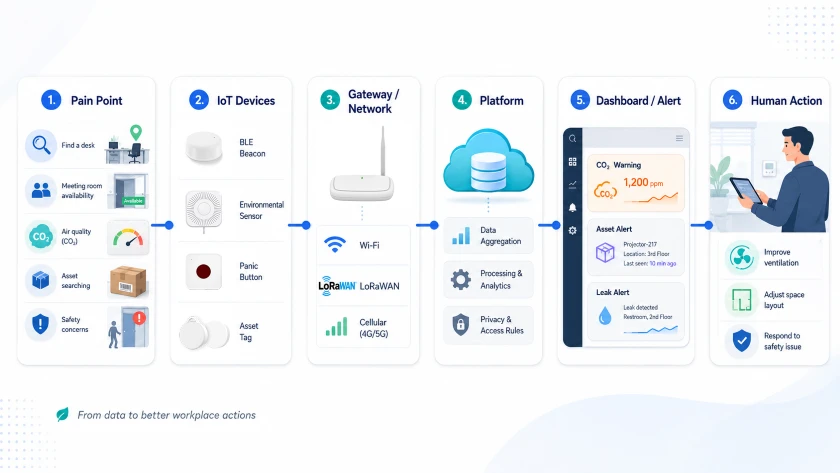
اطرح سؤالاً بسيطًا. هل يكافح الناس للعثور على مكاتب؟? هل يصعب حجز غرف الاجتماعات? هل نوعية الهواء غير واضحة؟? هل من الصعب تحديد موقع الأصول؟? هل السلامة مصدر قلق?
لا تبدأ بـ "نحن بحاجة إلى أجهزة استشعار". ابدأ بمشكلة الموظف.
خطوة 2: خريطة مسار البيانات
يحتاج كل نظام إنترنت الأشياء إلى تدفق واضح:
الجهاز ← البوابة أو الشبكة ← النظام الأساسي ← لوحة المعلومات أو التنبيه ← العمل البشري
إذا لم يتصرف أحد على البيانات, يضيف النظام قيمة قليلة.
خطوة 3: اختر الأجهزة المناسبة
قد تحتاج المكاتب الصغيرة إلى إشارات بليه, بوابات, وأجهزة استشعار بسيطة. قد تحتاج المواقع الكبيرة إلى LoRaWAN, واي فاي, الخلوية, أو الأنظمة المختلطة. قد تحتاج المناطق الحساسة للخصوصية إلى استشعار بدون كاميرا.
خطوة 4: ضبط قواعد الخصوصية
لا ينبغي أن يشعر الموظفون بالمراقبة.
تحديد البيانات التي يتم جمعها, من يستطيع رؤيته, كم من الوقت يتم تخزينه, وما إذا كان مرتبطًا بالأفراد. في كثير من الحالات, البيانات المجمعة كافية.
خطوة 5: ربط البيانات بالعمليات
لا تعمل لوحات المعلومات على تحسين تجربة مكان العمل بمفردها. سير العمل يفعل.
على سبيل المثال:
• ارتفاع نسبة ثاني أكسيد الكربون ← زيادة التهوية
• غرفة غير مستخدمة → تخطيط المراجعة
• يترك الأصول المنطقة المعتمدة → إرسال التنبيه
• تم اكتشاف التسرب ← صيانة الإرسال
• الضغط على زر الذعر → إعلام فريق الاستجابة
يخلق إنترنت الأشياء قيمة عندما يغير ما تفعله الفرق بعد ذلك.
قم بتحسين مساحة عمل شركتك باستخدام Minew
يعتمد مكان العمل الذكي على أجهزة موثوقة. يجب أن تقوم أجهزة الاستشعار بجمع بيانات دقيقة. يجب أن تتناسب العلامات مع الأصول الحقيقية. يجب أن تقلل البوابات من النقاط العمياء. يجب أن تدعم الأجهزة النطاق الصحيح, عمر البطارية, مقاس, والاتصال.
مناجم توفر أجهزة إنترنت الأشياء للمساحات الذكية, تتبع الأصول, الاستشعار البيئي, إدارة الناس, والعمليات المتصلة. تشمل مجموعة منتجاتها أجهزة تعقب الأصول, منارات بلوتوث, علامات الموظفين, أجهزة الاستشعار, الراسبين, والبوابات
.
يدعم Minew أيضًا تصميم الأجهزة, التصميم الميكانيكي, تصميم مدمج, النماذج الأولية السريعة, هندسة الجودة, إنتاج المصنع, وضع العلامات البيضاء, والامتثال التنظيمي.
لمشاريع مكان العمل, يمكن أن يدعم Minew:
• استشعار إشغال المكاتب والغرف
• تحديد الطريق في الأماكن المغلقة على أساس منارة بليه
• مراقبة جودة الهواء والراحة
• تتبع الأصول للمعدات المشتركة
• شارات الموظفين للسلامة والتوعية بالموقع
• أزرار الذعر لتنبيهات الطوارئ
• بوابات بليه, لوراوان, واي فاي, وأنظمة إنترنت الأشياء الأخرى
• أجهزة مخصصة لتكامل الأنظمة ومقدمي الحلول
لفرق العقارات الشركات, يمكن أن تساعد الأجهزة الجديدة في جعل أداء المكتب قابلاً للقياس. لتكامل النظام, فهو يوفر طبقة الجهاز لمنصات أماكن العمل الذكية. لمديري المرافق, فهو يجعل رؤية العمليات والتصرف فيها أسهل.
خاتمة: مستقبل العمل ذكي
تجربة قوية في مكان العمل 2026 يعني أنه يمكن للموظفين دخول المكتب, العثور على ما يحتاجون إليه, ابق مرتاحا, أشعر بالأمان, والعمل مع تأخيرات أقل.
يجعل إنترنت الأشياء هذا ممكنًا من خلال إعطاء فرق العمل إشارات حية من المساحات, أصول, وظروف البناء.
أفضل المكاتب الذكية ستشعر بالبساطة. سيكون من الأسهل العثور على الغرف. سيكون من الأسهل تحديد موقع المعدات. تنبيهات السلامة ستكون أسرع. ستتم الصيانة قبل أن يشعر الموظفون بالمشكلة.
هذه هي الطريقة العملية للإجابة على كيفية تحسين تجربة مكان العمل باستخدام إنترنت الأشياء: إزالة الاحتكاك من يوم العمل, مشكلة حقيقية واحدة في وقت واحد.
لمعرفة المزيد عن بناء تجربة أفضل في مكان العمل, انظر القراءة الموصى بها:
👉 قمة 5 نصائح للسلامة في مكان العمل
👉 إنترنت الأشياء في مكان العمل: كيف أعزّر إنترنت الأشياء خدمة إدارة المساحات المكتبية?
👉 تقنيات الملاحة الداخلية: إلقاء الضوء على "حس الاتجاه" في الأماكن الداخلية
 الدردشة الآن