



Гибридный сотрудник может посещать офис только два-три дня в неделю.. Когда они прибудут, они ожидают, что основы будут работать.
Они хотят найти стол. Им нужен конференц-зал, который еще не занят.. Им нужен воздух, который не кажется затхлым. Они хотят найти общее оборудование, не спрашивая пять человек.. Они хотят чувствовать себя в безопасности в большом здании. Они хотят, чтобы офис облегчил их день, не медленнее.
Вот почему опыт работы на рабочем месте стал вопросом бизнеса., не просто тема удобств. CBRE 2026 исследование на рабочем месте охватывает данные клиента из 303 миллионов квадратных футов офисных площадей и показывает, как компании все еще корректируют свою недвижимость., операции, и культура гибридной работы. JLL 2026 отчет о занятости говорит, что глобальная загрузка офисов выросла до 56%, от 54% в 2025 и 49% в 2024.
Сообщение ясно. В офисных помещениях возобновилась активность, но ожидания сотрудников и модели использования изменились. Сотрудники приходят с целью. Они ожидают, что офис будет поддерживать встречи, сосредоточиться, обучение, работа в команде, и благополучие. Интернет вещей помогает, потому что превращает догадки на рабочем месте в доказательства на рабочем месте.
Расшифровка опыта на рабочем месте: Ядро умных офисов
Что такое опыт работы? На простом английском языке, это то, как сотрудники переживают работу в пространстве, инструменты, услуги, и взаимодействия вокруг них.
Умный офис добавляет еще один уровень: осведомленность в реальном времени.
Вместо того, чтобы планировать офис только на основе опросов или бейджей., команды могут использовать данные Интернета вещей, чтобы увидеть, что происходит сейчас. Они могут узнать, какие места заполнены., какие комнаты пустуют, где люди изо всех сил пытаются найти свой путь, и где комфорт окружающей среды требует внимания.
| Уровень рабочего места | Что замечают сотрудники | Что loT может измерить или поддержать |
| Космос | «Могу ли я найти стол или комнату??» | Размещение, Использование на столе, Использование комнаты, Поток людей |
| Комфорт | «Здесь легко работать?» | Температура, Влажность, Свет, Сопутствующий2, Вокал, Качество воздуха |
| Безопасность | «Могу ли я получить помощь, если что-то случится??» | Панические оповещения, Значки местоположения, Аварийное позиционирование |
| Производительность | «Могу ли я найти то, что мне нужно??» | Местоположение актива, Статус оборудования, История использования |
| Операции | «Работает ли офис гладко?? | Сигналы технического обслуживания, Использование энергии, Требования к очистке |
Это важно, поскольку программа повышения квалификации на рабочем месте не может улучшить то, чего она не видит.. Отзывы сотрудников расскажут вам, что чувствуют люди. Данные Интернета вещей показывают, что происходит в здании.
Наилучшие результаты достигаются, когда оба используются вместе..
Почему Интернет вещей имеет большее значение для опыта работы на рабочем месте 2026
Многие проблемы офиса не видны на плане помещения.
Комната для совещаний может выглядеть доступной, но после часа пребывания в ней шести человек становится душно.. Область сотрудничества может выглядеть популярной, но данные датчиков могут показать, что он используется только по вторникам.. Общий принтер может находиться «где-то на полу».,», но сотрудники все равно тратят время на его поиски. Команда объекта может убирать каждую комнату по одному и тому же графику., даже когда половина из них в тот день не использовалась.
IoT-оборудование помогает закрыть эти пробелы.
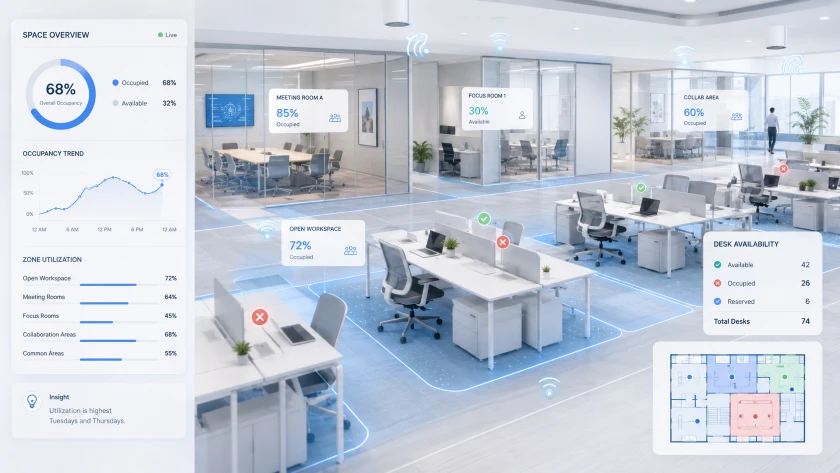
Распространенные системы интеллектуального рабочего места поддерживают такие варианты использования, как мониторинг занятости., отслеживание активов, внутренняя навигация, поиск конференц-зала, энергоэффективность, умные комнаты, использование пространства, и умный стол. Системы занятости собирают сигналы об использовании пространства от таких технологий, как Датчики PIR, Датчики ToF, и Датчики миллиметрового диапазона. Затем платформа превращает эти сигналы в оперативную и историческую информацию о занятости..
Это настоящий сдвиг. Офис становится системой обратной связи.
7 Ключевые способы, с помощью которых оборудование Интернета вещей улучшает качество работы на рабочем месте
1. Интеллектуальное управление пространством
Гибридная работа усложнила планирование пространства. Некоторые дни тихие. Другие дни переполнены. Одной команде могут понадобиться фокус-комнаты, а другому нужны проектные зоны.
Датчики присутствия, датчики присутствия, BLE-маяки, данные о местоположении смарт-бейджа, а устройства для подсчета людей показывают, как на самом деле используются помещения.
Это помогает командам:
• Превратите неиспользуемые столы в полезные комнаты.
• Добавляйте небольшие конференц-залы, если большие помещения используются не по назначению.
• Отрегулируйте очистку в зависимости от реального использования.
• Снижение энергопотребления в пустых зонах
• Планируйте аренду на основе реальных данных.
Это один четкий ответ на вопрос, как улучшить опыт на рабочем месте.: заставить офис соответствовать реальному поведению.
2. Умная навигация и поиск пути
Через большие офисы и кампусы может быть сложно передвигаться.. Новые сотрудники, Посетители, и сотрудники часто теряют время на поиск помещения, столы, или зоны обслуживания.
Технология внутренней навигации может проводить людей в конференц-залы, столы, кафетерии, зоны печати, тренировочные залы, пункты регистрации посетителей, и аварийные выходы.
Для сотрудников, это снимает стресс. Для менеджеров, это уменьшает задержки и улучшает ежедневный поток.
3. Умное освещение, Температура, и влажность
Комфорт влияет на то, как люди чувствуют себя и работают.
Датчики качества воздуха могут отслеживать температуру, влажность, осветительные приборы, и использование комнаты. Затем системы здания могут регулировать освещение и систему отопления, вентиляции и кондиционирования в зависимости от занятости и дневного света..
США. Агентство по охране окружающей среды отмечает, что комфорт в помещении зависит от температуры, движение воздуха, блики, шум, запахи, и другие строительные факторы. OSHA также связывает плохое качество воздуха в помещениях с головными болями, усталость, и проблемы с концентрацией внимания.
Интернет вещей упрощает управление комфортом, поскольку команды могут видеть закономерности, а не только реагировать на жалобы..
4. Мониторинг качества воздуха в помещении
Сотрудники не всегда могут видеть плохое качество воздуха, но они это чувствуют.
Датчики качества воздуха может отслеживать:
• CO₂
• Температура
• Влажность
• ЛОС
• Твердые частицы
• Потребности в вентиляции
Агентство по охране окружающей среды заявляет, что качество воздуха в помещении может повлиять на здоровье, комфорт, благополучие, и производительность. Руководство CDC также подчеркивает ценность хорошей вентиляции для более здоровой среды в помещении..
Для рабочих групп, IAQ теперь является частью доверия сотрудников. Комната не должна считаться готовой только потому, что она пуста в календаре..
5. Отслеживание и управление активами
Поиск общего оборудования, например комплектов для тестирования прототипов., портативные проекторы, или специализированные инструменты тратят часы продуктивного времени. Крепление небольшого Bluetooth Low Energy (БЛЕ) метки активов на корпоративном оборудовании позволяют сотрудникам точно определить, где находится элемент, с помощью централизованной информационной панели.. Это обеспечивает точность инвентаризации и гарантирует доступность инструментов в случае необходимости..
6. Системы экстренной эвакуации и определения местоположения в реальном времени
Во время критических чрезвычайных ситуаций в здании, команды безопасности должны точно знать, где находятся люди. Системы определения местоположения в режиме реального времени используют интеллектуальные бейджи или носимые устройства для мгновенного определения численности персонала в назначенных зонах сбора.. Это позволяет службам быстрого реагирования определять пропущенные места и быстрее координировать действия., более безопасная эвакуация.
7. Прогнозируемое обслуживание систем зданий
Когда сломался офисный лифт или неожиданно вышел из строя основной блок кондиционирования воздуха, комфорт сотрудников мгновенно падает. Датчики вибрации и температуры IoT круглосуточно контролируют тяжелое строительное оборудование. Выявляя ранние признаки износа до того, как произойдет полный отказ системы, бригады технического обслуживания могут запланировать ремонт в нерабочее время, обеспечение нулевого простоя работников.
Как улучшить качество работы на рабочем месте с помощью Интернета вещей
Проект «умного офиса» работает лучше всего, когда он начинается с малого и решает видимую проблему..
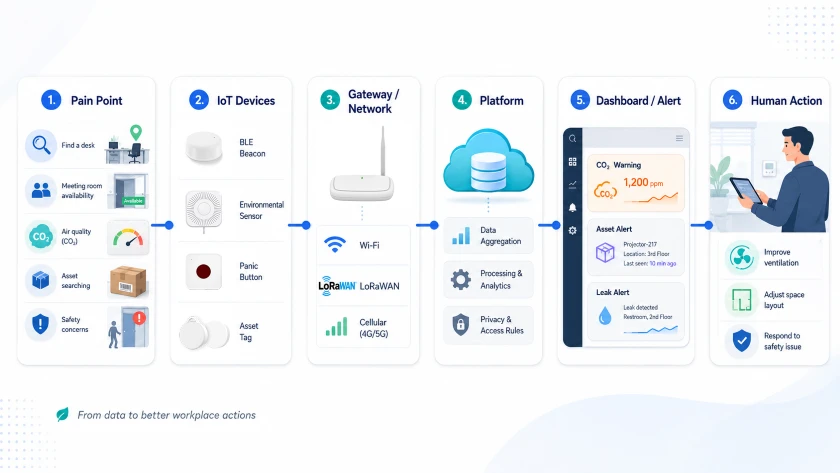
Шаг 1: Выберите «болевую точку» сотрудника
Задайте простой вопрос. Люди изо всех сил пытаются найти столы? Трудно ли забронировать конференц-залы? Качество воздуха неясно? Трудно ли найти активы? Является ли безопасность проблемой?
Не начинайте со слов «нам нужны датчики». Начните с проблемы сотрудников.
Шаг 2: Сопоставьте путь к данным
Каждая система Интернета вещей нуждается в четком потоке:
Устройство → Шлюз или сеть → Платформа → Панель мониторинга или оповещение → Действия человека.
Если никто не воздействует на данные, система добавляет мало ценности.
Шаг 3: Выберите подходящее оборудование
Небольшим офисам могут потребоваться маяки BLE, шлюзы, и простые датчики. Большим сайтам может потребоваться LoRaWAN, Wi-Fi, Сотовая связь, или смешанные системы. В зонах, чувствительных к конфиденциальности, может потребоваться распознавание без использования камер..
Шаг 4: Установите правила конфиденциальности
Сотрудники не должны чувствовать, что за ними наблюдают.
Определите, какие данные собираются, кто может это увидеть, как долго он хранится, и привязано ли оно к физическим лицам. Во многих случаях, агрегированных данных достаточно.
Шаг 5: Подключите данные к операциям
Панели мониторинга сами по себе не улучшают качество работы на рабочем месте. Рабочие процессы делают.
Например:
• Высокий уровень CO₂ → увеличьте вентиляцию.
• Неиспользуемая комната → проверьте планировку.
• Актив покидает одобренную зону → отправить оповещение
• Обнаружена утечка → диспетчерское обслуживание
• Нажата тревожная кнопка → уведомить группу реагирования
Интернет вещей создает ценность, когда меняет то, что команды будут делать дальше.
Оптимизируйте свое корпоративное рабочее пространство с помощью Minew
Умное рабочее место зависит от надежного оборудования. Датчики должны собирать точные данные. Теги должны соответствовать реальным активам. Шлюзы должны сокращать слепые зоны. Устройства должны поддерживать правильный диапазон, срок службы батареи, размер, и подключение.
Мины предоставляет оборудование IoT для умных пространств, отслеживание активов, экологическое зондирование, управление персоналом, и связанные операции. Ассортимент продукции включает в себя трекеры активов., Bluetooth-маяки, персональные теги, датчики, ретрансляторы, и шлюзы
.
Minew также поддерживает проектирование оборудования., механическая конструкция, встроенный дизайн, быстрое прототипирование, проектирование качества, заводское производство, белая маркировка, и соответствие нормативным требованиям.
Для проектов на рабочем месте, Майнью может поддержать:
• Определение занятости столов и комнат.
• Навигация в помещении на основе BLE-маяка
• Мониторинг качества воздуха и комфорта
• Отслеживание активов общего оборудования.
• Персональные значки для обеспечения безопасности и определения местоположения.
• Тревожные кнопки для экстренных оповещений.
• Шлюзы для BLE, ЛоРаВАН, Wi-Fi, и другие системы Интернета вещей
• Специальное оборудование для системных интеграторов и поставщиков решений.
Для команд корпоративной недвижимости, Аппаратное обеспечение Minew может помочь сделать производительность офиса измеримой. Для системных интеграторов, он обеспечивает уровень устройства для платформ интеллектуальных рабочих мест. Для руководителей объектов, это облегчает просмотр операций и выполнение действий.
Заключение: Будущее работы – интеллектуальное
Большой опыт работы в 2026 означает, что сотрудники могут войти в офис, найти то, что им нужно, оставайся комфортно, чувствовать себя в безопасности, и работать с меньшими задержками.
Интернет вещей делает это возможным, предоставляя командам на рабочих местах живые сигналы из космоса., ресурсы, и условия строительства.
Лучшие умные офисы будут простыми. Номера будет легче найти. Оборудование будет легче найти. Оповещения о безопасности будут быстрее. Техническое обслуживание будет проведено до того, как сотрудники почувствуют проблему.
Это практический способ ответить на вопрос, как улучшить качество работы на рабочем месте с помощью Интернета вещей.: убрать трения из рабочего дня, одна реальная проблема за раз.
Подробнее о создании лучшего опыта на рабочем месте, см. нашу рекомендуемую литературу:
👉 Вершина 5 Советы по безопасности на рабочем месте
👉 IoT на рабочем месте: Как усиление IoT улучшенное обслуживание управления офисным пространством?
👉 Внутренняя навигационная технология: Освещение «чувства направления» в закрытых помещениях
 Теперь говорите