


Un furgone per le consegne lascia il deposito in orario. Due ore dopo, il traffico chiude il percorso. Un cliente non è disponibile, un altro sito ha limiti di accesso, e non è possibile trovare un pacchetto. Il piano mattutino fallisce entro mezzogiorno.
Questa è la sfida quotidiana della Logistica dell’Ultimo Miglio. Ogni fermata ha limiti e rischi diversi. Senza visibilità in tempo reale, piccoli problemi diventano finestre mancate, miglia extra, ripetere le visite, e chiamate di supporto.
La soluzione IoT fornisce ai team logistici i dati diretti dai veicoli, pacchi, pallet, e siti di consegna. Questi dati li aiutano a rispondere prima, pianificare con fatti migliori, e fornire ai clienti aggiornamenti più chiari.
Qual è l'ultimo miglio nella logistica?
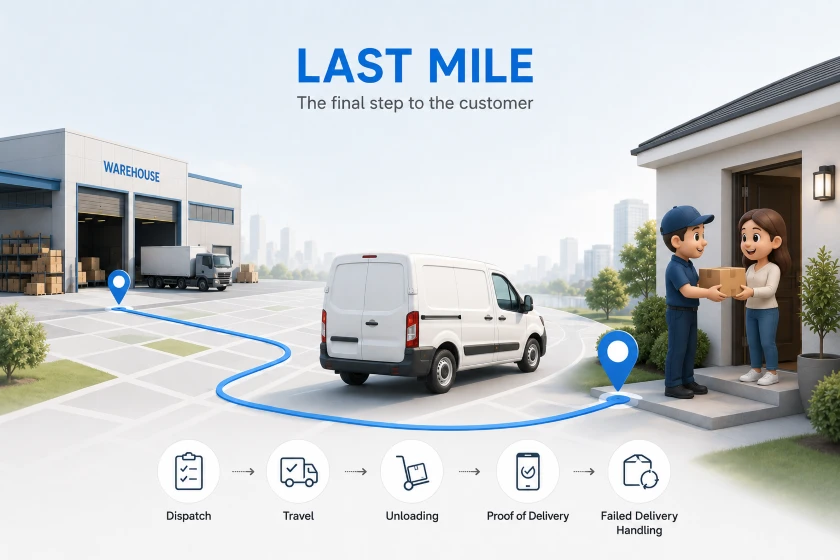
L'ultimo miglio è il movimento finale delle merci da un hub locale, magazzino, negozio, o centro logistico fino alla destinazione. Nella consegna al consumatore, quella destinazione è spesso una casa. Nella logistica business-to-business, potrebbe essere una fabbrica, cantiere, filiale al dettaglio, Ospedale, o centro servizi.
Il termine descrive il passaggio di consegne finale, non una distanza fissa. Include la spedizione, viaggio, scarico, prova di consegna, e gestione della consegna non riuscita.
Questa fase è importante perché è il punto in cui la catena di fornitura incontra il cliente. Un magazzino può elaborare un ordine correttamente, ma il cliente giudica il servizio da ciò che accade alla porta.
Perché la consegna dell'ultimo miglio deve affrontare Molti problemi?
Le operazioni dell’ultimo miglio hanno un impatto fisico, umano, e problemi di dati che cambiano durante il giorno.
Le cause comuni di ritardo e spreco includono:
• Traffico, chiusure stradali, tempo atmosferico, e parcheggio limitato
• Bassa densità di consegna in aree sparse
• Finestre di consegna e regole di accesso al sito ristrette
• Indirizzi errati o destinatari non disponibili
• Scarso coordinamento tra spedizionieri e autisti
• Pacchi mancanti o contenitori a rendere
• Guasti del veicolo e fermi macchina non pianificati
• Sistemi separati che non condividono i dati correnti
Sovrapposizione del percorso, congestione, lunghi viaggi rurali, e il tracciamento frammentato può aumentare il consumo di carburante, ridurre la densità di consegna, e aumentare il rischio di perdita di inventario.
La questione più profonda è l’incertezza. Uno spedizioniere può sapere dove dovrebbe essere un camion, ma non dove è adesso. Hardware dell'IoT riduce questo divario trasformando il movimento in eventi digitali tempestivi.
Applicazioni principali dell'hardware IoT nella logistica dell'ultimo miglio
Un pratico sistema IoT collega l'hardware di campo con i gateway, reti, e software logistico. L'hardware acquisisce i dati. Il software lo trasforma in avvisi, stime di arrivo, e istruzioni di lavoro.
La tabella seguente mostra come l'hardware comune supporta le decisioni quotidiane.
| Esigenza operativa | Hardware IoT tipico | Dati catturati | Azione aziendale |
| Visibilità della spedizione | Localizzatori GPS, Tracker Bluetooth, etichette cellulari | Posizione e stato del percorso | Trova ritardi e aggiorna i clienti |
| Controllo della flotta | Gateway veicolari e unità telematiche | Posizione, chilometraggio, tempo inattivo | Regola i percorsi e bilancia i carichi |
| Condizione dell'asset | Temperatura, shock, leggero, e sensori delle porte | Movimentazione ed eventi ambientali | Proteggi le merci e controlla i danni |
| Salute del veicolo | Sensori motore e componenti | Codici di guasto e segnali di usura | Pianifica il servizio prima del guasto |
| Precisione dell'inventario | Tag RFID, Tag Bluetooth, scanner | Identità dell'articolo e ubicazione della zona | Automatizza i conteggi e previeni le perdite |
Monitoraggio e visibilità in tempo reale
Il monitoraggio in tempo reale risponde a tre domande: Dov'è la spedizione?? In che condizioni è? Quando è probabile che arrivi?
I dispositivi GPS tracciano veicoli e risorse esterne. Tag Bluetooth a basso consumo energetico identificare i pacchi, pallet, gabbie, o strumenti all'interno di magazzini e veicoli. Le etichette cellulari inviano dati su vaste aree. I sensori possono anche segnalare la temperatura, shock, movimento, stato della porta, o esposizione alla luce.
Questo hardware crea checkpoint digitali. Gli spedizionieri possono vedere quando un pacco lascia il deposito, si ferma troppo a lungo, attraversa un recinto virtuale, o raggiunge il cliente. I dati in tempo reale supportano anche avvisi di ritardo e stime di arrivo più accurate.
Il valore principale è l'azione anticipata. Il dispatch può riassegnare le fermate, contrassegnare un pacco al di fuori di un'area approvata, o modificare una finestra di consegna dopo un ritardo del sito.
Gestione intelligente della flotta
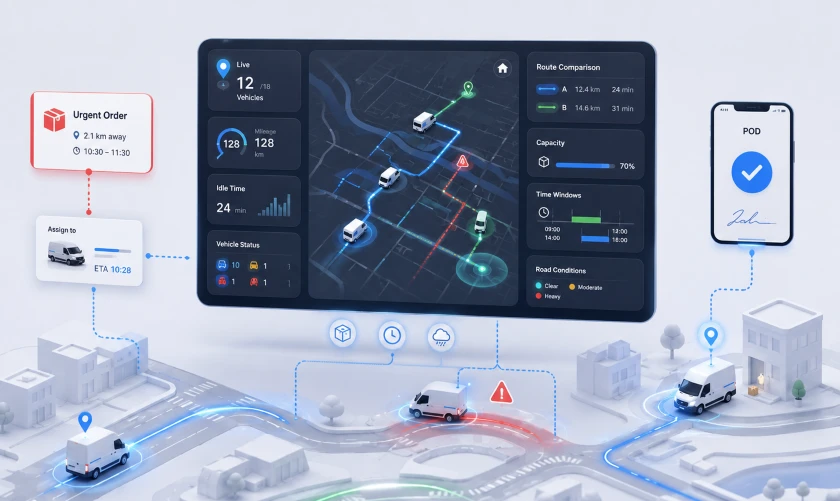
Gateway IoT e le unità telematiche possono inviare la posizione, chilometraggio, tempo inattivo, e lo stato del veicolo su una piattaforma centrale. Gli spedizionieri possono confrontare i percorsi pianificati con i progressi effettivi. Possono reindirizzare i veicoli evitando la congestione, assegnare ordini urgenti agli autisti nelle vicinanze, o bilanciare il lavoro tra i percorsi.
I dati della flotta possono supportare la prova elettronica di consegna registrando l'ora, posizione, conferma del destinatario, e risultato. Ciò riduce le controversie.
I sistemi più potenti collegano la posizione del veicolo con la priorità dell'ordine, capacità, finestre temporali del cliente, e le condizioni stradali in Gestione della flotta IoT. Quel collegamento supporta scelte migliori mentre il percorso è attivo.
Manutenzione predittiva
Un guasto al veicolo può ritardare molti ordini, richiedono un altro veicolo, e danneggiare la fiducia dei clienti.
Manutenzione predittiva utilizza i dati dei sensori e della telematica per identificare i segni di usura prima di un guasto. Gli input possono includere codici di guasto del motore, condizione dei freni, dati sugli pneumatici, salute della batteria, temperatura, vibrazione, e orari di funzionamento.
L’obiettivo è individuare il rischio con sufficiente anticipo per programmare il servizio in un momento meno dirompente. I casi d’uso nel settore mostrano che i dati dei veicoli possono aiutare a rilevare i modelli di usura, ridurre i guasti non pianificati, e migliorare la disponibilità della flotta.
Vantaggi principali guidati dall'hardware IoT
Maggiore efficienza operativa e risparmio sui costi
Il dispositivo IoT aiuta i team a gestire le eccezioni più velocemente. Il personale dedica meno tempo a chiamare gli autisti, ricerca di beni, controllo dei registri cartacei, o reagire ai reclami.
Dati di percorso migliori possono ridurre le fermate ripetute e i chilometri inutili. Gli eventi di inventario automatizzato riducono le scansioni manuali. Gli avvisi di manutenzione tempestivi possono impedire che un guasto incida su un percorso completo. Una prova accurata della consegna può abbreviare la gestione delle controversie.
Un tracker da solo non migliora le operazioni. L’azienda deve collegare i dati a regole chiare. I team devono sapere chi riceve un avviso e quale azione segue.
Migliore esperienza del cliente e fedeltà al marchio
In 2026, i clienti possono accettare un'opzione di consegna più lenta quando costa meno, ma si aspettano ancora di sapere dov'è l'ordine e se l'orario promesso è cambiato. La visibilità end-to-end supporta finestre di consegna precise, avvisi proattivi di ritardo, e una gestione più agevole dei problemi.
La visibilità riduce lo sforzo del cliente. Le persone possono prepararsi per la consegna, organizzare l'accesso al sito, o modificare i piani senza chiamare l'assistenza.
La fiducia cresce quando gli aggiornamenti sono tempestivi e onesti. Un chiaro avviso di ritardo è spesso migliore di una promessa imprecisa seguita dal silenzio, soprattutto per merci di alto valore o urgenti.
Gestione dell'inventario migliorata
L'ultimo miglio inizia prima della partenza del veicolo. Una scarsa precisione dell'inventario presso il deposito può causare carichi errati, pacchi mancanti, e partenze ritardate.
I tag Bluetooth identificano i pallet, pacchi, contenitori, e articoli di trasporto riutilizzabili. I gateway registrano quando una risorsa entra in una zona, lascia un molo, o carichi su un veicolo. Ciò crea una visualizzazione dell'inventario più aggiornata e riduce la ricerca manuale.
Miniere i prodotti di monitoraggio offrono esempi per questo livello. MTB07 Bluetooth Pallet Tracker supporta la visibilità del pallet, aggiornamenti sul movimento, avvisi di recinto geografico, e rilevamento dell'impatto opzionale. Etichetta di risorsa collegabile MBT02 aggiunge indicazioni luminose e sonore per aiutare il personale a trovare gli articoli negli hub logistici affollati.
Per gli acquirenti, la domanda chiave non è quale tag abbia l'elenco di funzionalità più lungo. È quale hardware si adatta alla risorsa, ambiente, frequenza di aggiornamento, rete, piano batteria, e il costo totale di implementazione.
Sviluppo sostenibile
La sostenibilità dell’ultimo miglio inizia con meno spostamenti sprecati.
I dati attuali sul traffico e sulle consegne possono aiutare i veicoli a evitare distanze inutili e tempi di inattività. Una migliore pianificazione può anche ridurre le visite ripetute. Questi cambiamenti possono ridurre il consumo di carburante e le relative emissioni.
I dati IoT possono misurare il chilometraggio, tempo inattivo, utilizzo dell'energia, e percentuali di successo della consegna per il reporting e il miglioramento.
Gli acquirenti dovrebbero considerare anche la durata della batteria, modalità di risparmio energetico, opzioni di riparazione, e riutilizzo del dispositivo. Un localizzatore economico che necessita di frequenti sostituzioni può creare più interventi di manutenzione e rifiuti elettronici.
Conclusione
La logistica dell'ultimo miglio includerà sempre il traffico, cambiamenti del cliente, limiti del sito, ed eventi imprevisti. L’obiettivo non è eliminare ogni problema. L’obiettivo è individuare i problemi in anticipo e rispondere con informazioni migliori.
L'hardware IoT fornisce tale visibilità a livello di campo. I tracker mostrano dove si trovano merci e veicoli. I sensori mostrano la loro condizione. I dati telematici supportano il controllo e la manutenzione della flotta. Tag e gateway migliorano la precisione dell'inventario prima della spedizione.
Un progetto di successo inizia con un chiaro problema operativo, un risultato misurabile, e hardware che si adatti all'ambiente reale. Quando i dati portano ad azioni rapide, le operazioni dell’ultimo miglio diventano più efficienti, prevedibile, e più facile fidarsi dei clienti.
Cercando di approfondire le tendenze della catena di fornitura e della logistica? Dai un'occhiata a questi articoli correlati:
👉 Le migliori conoscenze sulla logistica intelligente
👉 Cosa può fare l'IoT nella visibilità della catena di approvvigionamento?
👉 Oltre il GPS: Tecnologie di tracciamento intelligente per 2026

 Chatta adesso