


Uma van de entrega sai do depósito na hora certa. Duas horas depois, o trânsito fecha a rota. Um cliente está indisponível, outro site tem limites de acesso, e um pacote não pode ser encontrado. O plano matinal está falhando ao meio-dia.
Este é o desafio diário da Last-Mile Logistics. Cada parada tem limites e riscos diferentes. Sem visibilidade em tempo real, pequenos problemas tornam-se janelas perdidas, milhas extras, repetir visitas, e chamadas de suporte.
Solução IoT fornece às equipes de logística dados diretos dos veículos, parcelas, paletes, e locais de entrega. Esses dados os ajudam a responder mais cedo, planeje com fatos melhores, e fornecer aos clientes atualizações mais claras.
Qual é a última milha em logística?
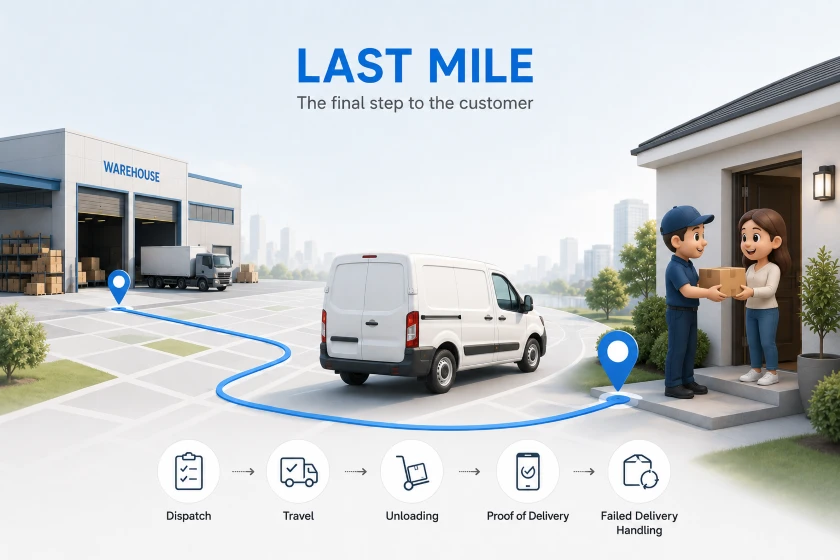
A última milha é o movimento final de mercadorias de um centro local, armazém, loja, ou centro de distribuição até o destino. Na entrega ao consumidor, esse destino é muitas vezes uma casa. Na logística business-to-business, pode ser uma fábrica, canteiro de obras, filial de varejo, hospital, ou centro de serviços.
O termo descreve a transferência final, não é uma distância fixa. Inclui expedição, viagem, descarregando, comprovante de entrega, e falha no processamento de entrega.
Esta etapa é importante porque é onde a cadeia de suprimentos encontra o cliente. Um armazém pode processar um pedido corretamente, mas o cliente julga o serviço pelo que acontece na porta.
Por que a entrega da última milha enfrenta Muitos problemas?
As operações de última milha enfrentam problemas físicos, humano, e problemas de dados que mudam durante o dia.
As causas comuns de atraso e desperdício incluem:
• Tráfego, fechamentos de estradas, clima, e estacionamento limitado
• Baixa densidade de entrega em áreas espalhadas
• Janelas de entrega restritas e regras de acesso ao site
• Endereços incorretos ou destinatários indisponíveis
• Má coordenação entre despachantes e motoristas
• Pacotes perdidos ou recipientes retornáveis
• Falhas do veículo e tempo de inatividade não planejado
• Sistemas separados que não compartilham dados atuais
Sobreposição de rota, congestionamento, longas viagens rurais, e o rastreamento fragmentado pode aumentar o uso de combustível, reduzir a densidade de entrega, e aumentar o risco de perda de estoque.
A questão mais profunda é a incerteza. Um despachante pode saber onde um caminhão deve estar, mas não onde está agora. Hardware IoT reduz essa lacuna, transformando o movimento em eventos digitais oportunos.
Principais aplicações de hardware IoT na logística de última milha
Um sistema IoT prático conecta hardware de campo com gateways, redes, e software de logística. Hardware captura dados. Software transforma isso em alertas, estimativas de chegada, e instruções de trabalho.
A tabela abaixo mostra como o hardware comum suporta decisões diárias.
| Necessidade Operacional | Hardware IoT típico | Dados capturados | Ação Empresarial |
| Visibilidade da remessa | Rastreadores GPS, Rastreadores Bluetooth, rótulos celulares | Localização e status da rota | Encontre atrasos e atualize os clientes |
| Controle de Frota | Gateways de veículos e unidades telemáticas | Posição, quilometragem, tempo ocioso | Ajuste rotas e equilibre cargas |
| Condição do ativo | Temperatura, choque, luz, e sensores de porta | Manipulação e eventos ambientais | Proteja mercadorias e revise danos |
| Saúde do veículo | Sensores de motor e componentes | Códigos de falha e sinais de desgaste | Agende o serviço antes da falha |
| Precisão do inventário | Etiquetas RFID, Etiquetas Bluetooth, scanners | Identidade do item e localização da zona | Automatize contagens e evite perdas |
Rastreamento e visibilidade em tempo real
O rastreamento em tempo real responde a três perguntas: Onde está o envio? Em que condições está? Quando é provável que chegue?
Dispositivos GPS rastreiam veículos e ativos externos. Etiquetas Bluetooth de baixa energia identificar parcelas, paletes, gaiolas, ou ferramentas dentro de armazéns e veículos. Etiquetas celulares enviam dados por amplas áreas. Os sensores também podem relatar a temperatura, choque, movimento, estado da porta, ou exposição à luz.
Este hardware cria pontos de verificação digitais. Os despachantes podem ver quando um pacote sai do depósito, pára por muito tempo, atravessa uma cerca geográfica, ou chega ao cliente. Os dados em tempo real também suportam alertas de atraso e estimativas de chegada mais precisas.
O principal valor é a ação anterior. O despacho pode reatribuir paradas, sinalizar um pacote fora de uma área aprovada, ou ajuste uma janela de entrega após um atraso no site.
Gestão Inteligente de Frota
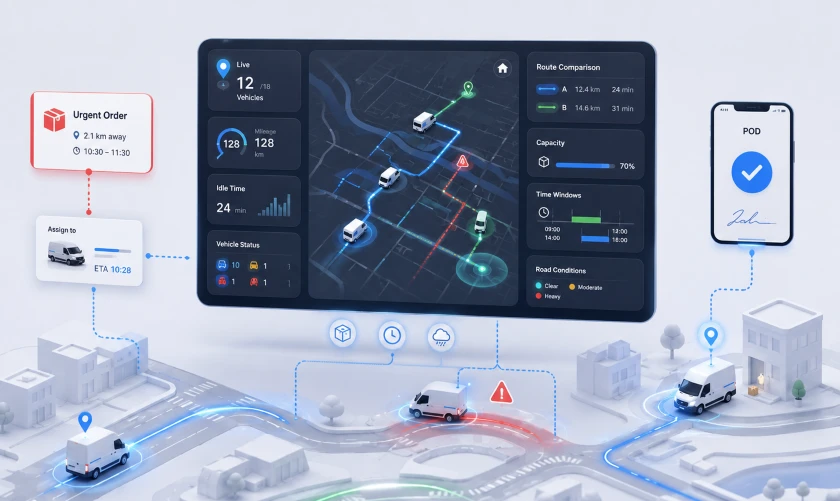
Gateways IoT e unidades telemáticas podem enviar localização, quilometragem, tempo ocioso, e status do veículo para uma plataforma central. Os despachantes podem comparar as rotas planejadas com o progresso real. Eles podem redirecionar veículos em torno de congestionamentos, atribuir pedidos urgentes a motoristas próximos, ou equilibrar trabalho entre rotas.
Os dados da frota podem dar suporte à prova eletrônica de entrega, registrando o tempo, localização, confirmação do destinatário, e resultado. Isso reduz disputas.
Os sistemas mais fortes conectam a posição do veículo com a prioridade do pedido, capacidade, janelas de tempo do cliente, e as condições das estradas em Gestão de frota IoT. Esse link permite melhores escolhas enquanto a rota está ativa.
Manutenção Preditiva
Uma falha no veículo pode atrasar muitos pedidos, preciso de outro veículo, e prejudicar a confiança do cliente.
Manutenção preditiva usa dados de sensores e telemática para identificar sinais de desgaste antes de uma avaria. As entradas podem incluir códigos de falha do motor, condição do freio, dados do pneu, saúde da bateria, temperatura, vibração, e horário de funcionamento.
O objetivo é detectar o risco com antecedência suficiente para agendar o serviço em um horário menos perturbador. Casos de uso da indústria mostram que os dados do veículo podem ajudar a detectar padrões de desgaste, reduzir falhas não planejadas, e melhorar a disponibilidade da frota.
Principais benefícios impulsionados pelo hardware IoT
Maior eficiência operacional e economia de custos
Dispositivo IoT ajuda equipes a gerenciar exceções com mais rapidez. A equipe gasta menos tempo ligando para os motoristas, em busca de ativos, verificando registros em papel, ou reagindo a reclamações.
Melhores dados de rota podem reduzir paradas repetidas e quilômetros desnecessários. Eventos de inventário automatizados reduzem verificações manuais. Alertas de manutenção antecipada podem impedir que uma falha afete uma rota completa. Uma prova de entrega precisa pode reduzir o tratamento de disputas.
Um rastreador por si só não melhora as operações. A empresa deve conectar dados a regras claras. As equipes precisam saber quem recebe um alerta e qual ação se segue.
Melhor experiência do cliente e fidelidade à marca
Em 2026, os clientes podem aceitar uma opção de entrega mais lenta quando custa menos, mas eles ainda esperam saber onde está o pedido e se o horário prometido mudou. A visibilidade de ponta a ponta oferece suporte a janelas de entrega precisas, avisos de atraso proativos, e tratamento de problemas mais suave.
A visibilidade reduz o esforço do cliente. As pessoas podem se preparar para a entrega, organizar o acesso ao site, ou mude de plano sem ligar para o suporte.
A confiança aumenta quando as atualizações são oportunas e honestas. Um aviso de atraso claro é muitas vezes melhor do que uma promessa imprecisa seguida de silêncio, especialmente para bens de alto valor ou urgentes.
Gerenciamento de estoque aprimorado
A última milha começa antes da partida do veículo. A baixa precisão do estoque no depósito pode causar carregamentos errados, pacotes perdidos, e partidas atrasadas.
Tags Bluetooth identificam paletes, parcelas, containers, e itens de transporte reutilizáveis. Os gateways registram quando um ativo entra em uma zona, deixa uma doca, ou cargas em um veículo. Isso cria uma visualização de inventário mais atual e reduz a pesquisa manual.
Minas produtos de rastreamento oferecem exemplos para esta camada. Rastreador de paletes MTB07 Bluetooth suporta visibilidade de paletes, atualizações de movimento, alertas de cerca geográfica, e detecção de impacto opcional. Etiqueta de ativo conectável MBT02 adiciona orientação luminosa e sonora para ajudar a equipe a encontrar itens em centros logísticos movimentados.
Para compradores, a questão principal não é qual tag tem a lista de recursos mais longa. É qual hardware se adapta ao ativo, ambiente, taxa de atualização, rede, plano de bateria, e custo total de implantação.
Desenvolvimento Sustentável
A sustentabilidade da última milha começa com menos movimentos desperdiçados.
Os dados atuais de trânsito e entrega podem ajudar os veículos a evitar distâncias desnecessárias e tempo ocioso. Um melhor planejamento também pode reduzir visitas repetidas. Essas mudanças podem reduzir o uso de combustível e as emissões relacionadas.
Dados IoT podem medir quilometragem, tempo ocioso, uso de energia, e taxas de sucesso de entrega para relatórios e melhorias.
Os compradores também devem considerar a duração da bateria, modos de economia de energia, opções de reparo, e reutilização de dispositivos. Um rastreador barato que precisa de substituição frequente pode gerar mais trabalho de serviço e lixo eletrônico.
Conclusão
A logística de última milha sempre incluirá o tráfego, alterações do cliente, limites do site, e acontecimentos inesperados. O objetivo não é remover todos os problemas. O objetivo é ver os problemas mais cedo e responder com melhores informações.
O hardware IoT fornece essa visibilidade em nível de campo. Rastreadores mostram onde estão mercadorias e veículos. Sensores mostram sua condição. Os dados telemáticos apoiam o controle e a manutenção da frota. Tags e gateways melhoram a precisão do inventário antes do envio.
Um projeto de sucesso começa com um problema operacional claro, um resultado mensurável, e hardware que se adapta ao ambiente real. Quando os dados levam a ações rápidas, as operações de última milha tornam-se mais eficientes, previsível, e mais fácil para os clientes confiarem.
Procurando se aprofundar nas tendências da cadeia de suprimentos e logística? Confira estes artigos relacionados:
👉 Principais conhecimentos sobre logística inteligente
👉 O que a IoT pode fazer na visibilidade da cadeia de suprimentos?
👉 Além do GPS: Tecnologias de rastreamento inteligente para 2026


 Conversar Agora