


💡 La esencia:
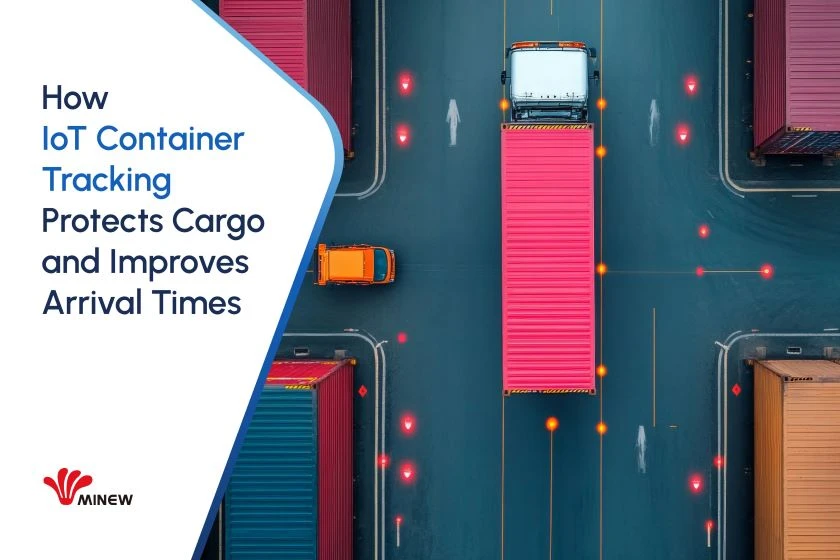
El seguimiento tradicional solo lo actualiza cuando un contenedor pasa hitos específicos como puertos o puntos de control.. Esto deja largos períodos de completo silencio.. El seguimiento moderno de contenedores mediante IoT resuelve este problema mediante el uso de sensores inteligentes y redes inalámbricas para transmitir la ubicación en vivo y el estado de la carga directamente a su pantalla durante todo el viaje..
Imagínese enviar productos electrónicos por valor de un millón de dólares a través del océano. durante dos semanas, no escuchas nada. Sólo descubre que el sistema de refrigeración falló después de que la mercancía dañada llega al puerto de destino..
La logística tradicional depende en gran medida de las actualizaciones de hitos. Sabes cuando sale tu carga y sabes cuando llega. Todo lo que hay en el medio es un punto ciego total..
Hoy, Logística inteligente soluciona esta brecha de visibilidad. El uso del seguimiento de contenedores de IoT permite a las compañías navieras y a los propietarios de carga ver el interior de sus contenedores en cualquier momento del viaje..
¿Qué es el seguimiento de contenedores de IoT??
El seguimiento de contenedores de IoT es el proceso de utilizar dispositivos de hardware inteligentes conectados para monitorear la posición en tiempo real y el estado físico de los contenedores de envío..
La mayor diferencia entre esta tecnología y los métodos más antiguos se reduce al flujo de datos.. Los sistemas más antiguos le brindan actualizaciones intermitentes horas o días después de que ocurre un evento. Un sistema IoT proporciona un flujo continuo de datos en vivo para que pueda tomar decisiones de inmediato.
La siguiente tabla muestra cómo se compara este nuevo enfoque con los métodos de seguimiento más antiguos..
| Característica | Seguimiento tradicional | Seguimiento de contenedores de IoT |
| Frecuencia de datos | Actualizaciones intermitentes en los puntos de control | Flujo de datos continuo |
| Precisión de ubicación | Solo a nivel de puerto o patio | Coordenadas GPS precisas |
| Monitoreo de condición | Ninguno hasta la inspección manual | Temperatura en tiempo real, humedad, y shock |
| Alertas de seguridad | Descubierto después de su llegada | Notificación instantánea si se abren puertas |
Los componentes clave del sistema
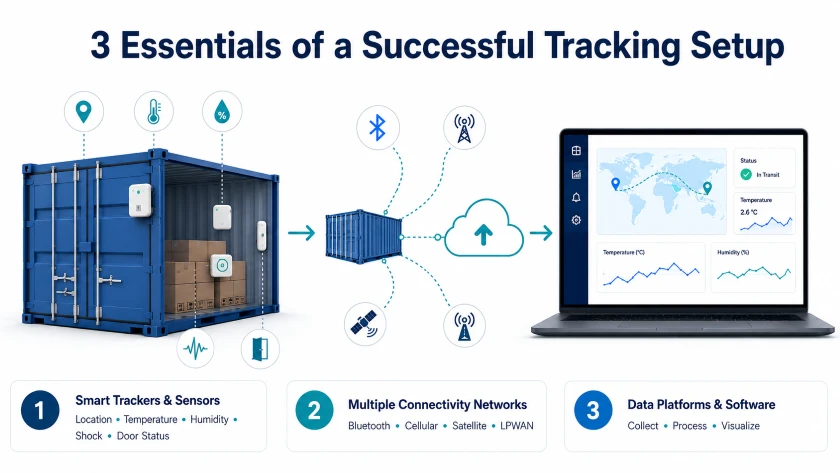
Una configuración de seguimiento exitosa depende de tres partes técnicas esenciales que trabajan juntas.
Rastreadores inteligentes y Sensores de IoT: Los trabajadores fijan estos dispositivos de hardware compactos a la puerta del contenedor o los colocan dentro de la caja.. Los dispositivos monitorean los cambios físicos, incluida la ubicación precisa., temperatura ambiente, humedad relativa, golpes de fuerte impacto, y estado de la puerta del contenedor.
Múltiples redes de conectividad: Los rastreadores utilizan diferentes tecnologías inalámbricas según la distancia y el entorno.. Utilizan redes de corto alcance como Bluetooth para recopilar datos de sensores individuales colocados dentro del contenedor. Para transmisión de larga distancia, uso de dispositivos redes celulares cerca de la tierra, enlaces satelitales a través de océanos profundos, y redes de área amplia de baja potencia (LPWAN) para ahorrar energía en puertos saturados.
Plataformas de datos y software: Este panel en línea actúa como el cerebro de la operación.. Recopila automáticamente los datos sin procesar del campo., maneja el procesamiento, y muestra la información en mapas y gráficos limpios para los gerentes de logística.
Beneficios principales del seguimiento de contenedores de IoT
Mejor precisión de ETA
Cuando tienes visibilidad total sobre la dinámica de la carga, Puedes predecir los tiempos de llegada con alta precisión.. El seguimiento en vivo significa que no tiene que adivinar cuándo atracará un barco retrasado.. Si una tormenta frena un barco, usted ve el retraso al instante y puede ajustar sus planes de cadena de suministro.
Seguridad de carga mejorada
El robo y la manipulación de carga son enormes desafíos financieros. Los rastreadores inteligentes envían alertas inmediatas en el momento en que alguien abre la puerta de un contenedor fuera de una zona aprobada. También puedes establecer límites digitales, conocido como geocercado, en un mapa digital. Si el contenedor sale de su ruta autorizada, el sistema marca el evento anómalo inmediatamente para que usted pueda notificar a las autoridades.
Mejor eficiencia operativa
Las empresas de logística pierden dinero cuando los contenedores vacíos permanecen inactivos en los astilleros. El seguimiento en vivo ayuda a los gerentes a reducir el tiempo de contenedores vacíos y mejorar la utilización de los activos en toda la flota.. Además, analizando datos de viajes anteriores, Las empresas pueden optimizar sus rutas de envío para evitar cuellos de botella en el tráfico y ahorrar combustible..
Mayor satisfacción del cliente
Los clientes empresariales modernos esperan un seguimiento transparente durante todo el proceso de envío. Proporcionar a sus clientes un enlace seguro a un mapa de seguimiento en vivo genera una profunda confianza. Elimina las llamadas telefónicas ansiosas y mantiene a todos alineados..
Aplicaciones y casos de uso del mundo real
Carga de alto valor
Electrónica, productos farmaceuticos, y los artículos de lujo son los objetivos principales de los ladrones de carga. Los sensores de IoT garantizan que estos costosos productos permanezcan en los caminos designados. Para productos farmacéuticos, Los sensores también demuestran que los artículos permanecieron seguros y efectivos durante el transporte..
Mercancías perecederas
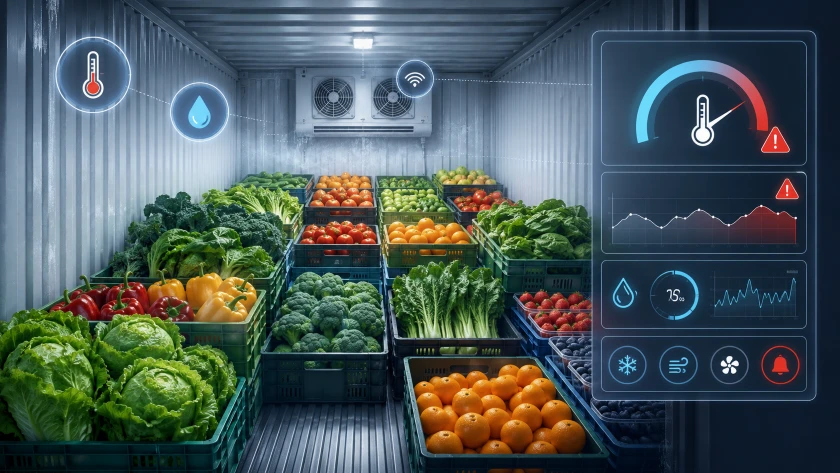
Los alimentos y los productos químicos sensibles a la temperatura requieren controles ambientales estrictos. Si falla una unidad de refrigeración en una cubierta de carga caliente, el sensor activa una alarma de temperatura. Los gerentes pueden comunicarse con el transportista de inmediato para solucionar el problema antes de que la comida se eche a perder..
Seguridad de la carga en zonas de alto riesgo
Algunas rutas marítimas y terrestres tienen altos índices de robo y piratería.. Etiquetas de seguimiento de activos Brinde a los operadores de seguridad datos instantáneos si un vehículo se detiene inesperadamente o se desvía hacia un área peligrosa..
Gestión y reposicionamiento de contenedores vacíos
Las compañías navieras devuelven periódicamente contenedores vacíos a los centros de fabricación., lo cual es un desafío logístico enorme y costoso. La tecnología IoT simplifica este proceso. Los datos del rastreador muestran exactamente qué contenedores están vacíos y dónde están ubicados en tiempo real. Esta visibilidad hace que el reposicionamiento de contenedores sea mucho más rápido y reduce las costosas tarifas de almacenamiento en el patio..
Aplicaciones multimodales entre industrias
Las cadenas de suministro modernas implican traspasos complejos entre diferentes modos de transporte. Los rastreadores de IoT funcionan de forma fiable en el transporte marítimo, carga aérea, redes ferroviarias, y transporte por carretera, brindándole una única herramienta de seguimiento para todo el viaje.
Factores que impulsan la adopción del seguimiento de contenedores de IoT
Caída de los costos de hardware y conectividad
En el pasado, El hardware de seguimiento inteligente era demasiado caro para los envíos estándar.. La producción en masa ha reducido significativamente el coste de los componentes.. Los planes de datos globales también son más asequibles ahora, hacer que el seguimiento sea rentable para el transporte diario.
Ampliación de la cobertura de la red global
Las redes celulares y LPWAN ahora cubren casi todos los puertos y carreteras comerciales más importantes del mundo.. Al mismo tiempo, Nuevos grupos de satélites hacen accesible la cobertura oceánica.. Sus datos de seguimiento siguen moviéndose incluso cuando su carga cruza fronteras internacionales remotas.
Mejoras en la tecnología de la batería y la vida útil del dispositivo
Los primeros dispositivos de seguimiento se quedaron sin energía después de unos días, haciéndolos inútiles para largos viajes por mar. Hoy, La administración avanzada de energía permite que los dispositivos funcionen durante meses o años con una sola carga..
minas Proporcionar múltiples opciones para resolver desafíos operativos específicos en el seguimiento de contenedores de IoT.. Para arreglar el consumo de batería durante largos viajes por mar, Los dispositivos de seguimiento Minew utilizan un diseño de bajo consumo y múltiples opciones de conectividad para adaptarse a diferentes redes regionales.. Para seguimiento de ruta básico, El hardware compacto proporciona datos de ubicación únicamente.. Para carga sensible, Los rastreadores avanzados monitorean los cambios ambientales, incluida la temperatura., humedad, exposición a la luz, y aberturas de puertas. Los dispositivos Minew vienen en varios tamaños para adaptarse a diferentes diseños de contenedores, y las configuraciones de hardware flexibles le permiten cambiar los intervalos de informes de datos fácilmente. Los gabinetes de alta resistencia protegen los sensores de daños físicos en entornos portuarios hostiles.. Este enfoque de diseño específico garantiza que los proveedores de logística puedan seleccionar el hardware de seguimiento exacto necesario para eliminar los puntos ciegos en cualquier ruta específica..
Conclusión
Depender de actualizaciones antiguas crea puntos ciegos peligrosos que conducen a la pérdida de carga, robo, y plazos incumplidos. La implementación del seguimiento de contenedores de IoT brinda a los gerentes de la cadena de suministro un control total sobre sus activos. Protege el inventario de alto valor, optimiza la eficiencia de la flota, y genera confianza en el cliente. Invertir en hardware de seguimiento inteligente es una opción práctica, forma eficaz de proteger su cadena de suministro global. Los proveedores de soluciones de hardware como Minew facilitan esta transición al proporcionar las soluciones específicas, Dispositivos de bajo consumo necesarios para mantener su carga visible en cada milla del viaje..
Descubrir cómo el hardware inteligente transforma diferentes escenarios logísticos y le ayuda a elegir la arquitectura de seguimiento adecuada, explore nuestras ideas seleccionadas a continuación:
👉 Principales conocimientos sobre logística inteligente
👉 Más allá del GPS: Tecnologías de seguimiento inteligente
👉 ¿Qué es el seguimiento de palés y por qué es esencial para la logística moderna??
 Chatea ahora