
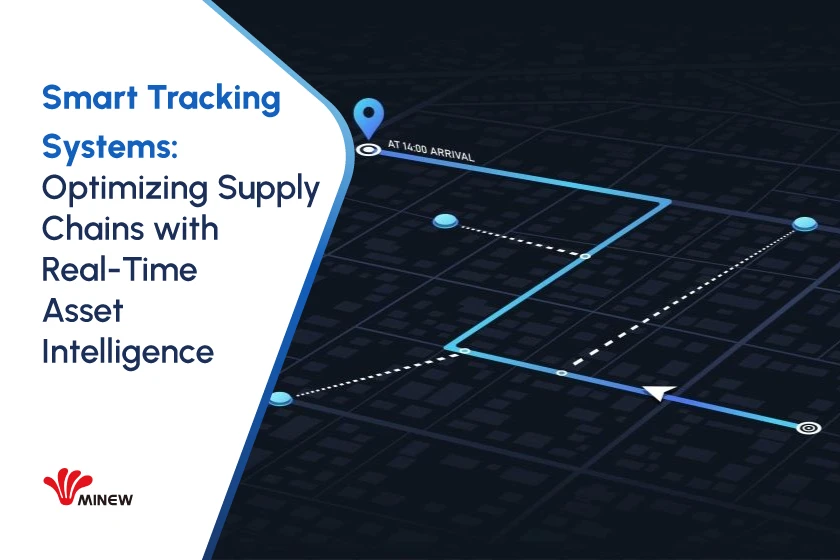
超越 GPS: 智能跟踪技术 2026

Minew 2月. 28. 2026
目录

    In the fast-moving world of the Internet of Things (物联网), knowing where your assets are is no longer enough. We have moved past the era of simple dots on a map into a new age of location intelligence. 今天, s市场 tracking has evolved from a basicfind my stufftool into a sophisticated operational nervous system for businesses.

    Smart Tracking Technologies for 2026

    Whether it is a hospital managing life-saving ventilators or a logistics giant monitoring thousands of micro-parcels, the shift from static data to real-time perception is changing how we work. This blog post explores how this technology works, 为什么重要, and the specific tools leading the charge.


    How Smart Tracking Works: The Layers of Intelligence

    To understand smart tracking device, you have to look beneath the surface. It is not just a plastic case with a battery: it is a multi-layered stack of hardware and software working in perfect harmony.

    Core Hardware

    At the core of every tracker is a combination of sensing technology and communication modules. The sensing components (such as GNSS for location or accelerometers for motion) capture the raw data about the asset’s state. The communication module (the radio) then packages this data to be sent wirelessly. Modern designs focus on ultra-low-power efficiency, often usingpaper batteriesor specialized chipsets that provide years of service in a tiny form factor.

    Connectivity Protocols

    Connectivity is the bridge that carries data. There is no one-size-fits-all solution here:

    蓝牙低功耗 (低功耗蓝牙): luetooth s perfect for indoor positioning and short-range asset management where battery life is the priority.

    窄带物联网 (窄带物联网): A cellular-based protocol that provides deep indoor penetration and urban reliability, ideal for smart meters and s市场 卫生保健.

    洛拉万: The go-to for long-range, private networks. It can transmit data over 5 到 15 公里, making it a favorite for agriculture and large industrial sites.

    边缘计算

    The biggest change in recent years is the rise of edge computing. Instead of sending every tiny bit of raw data to a distant cloud server, the smart tracking device processes information locally. This reduces latency, saves battery life, and ensures that critical alerts (like a safety breach) happen in real time.


    Why Your Business Needs a Tracking Strategy

    Implementing location intelligence is a strategic move that delivers three major benefits:

    运营效率: By automating asset counts and location updates, companies can reduce manual data entry by up to 80%. This lets your team focus on high-value work instead of searching for lost tools.

    数据驱动的见解: Analytics move fromwhat happened” 到 “what will happen.Predictive models use tracking data to forecast inventory needs and optimize supply chain routes.

    Risk Mitigation: Real-time visibility helps prevent theft and loss. In high-risk environments, it provides an audit trail that regulators and insurance companies trust.


    Industry Use Cases: Smart Tracking in Action

    Location intelligence is transforming specific sectors with precision:

    后勤 & 供应链: 先进的 聪明的 labels now provide visibility down to the individual parcel level, not just the container. 这 “granular traceabilityensures that sensitive items like pharmaceuticals are monitored for temperature and impact throughout their journey.

    Industrial Asset Management: In massive warehouses, 室内定位 help optimize the movement of forklifts and personnel, reducing collisions and improving workflow.

    智慧医疗: Hospitals leverage smart tracking to streamline patient flow and locate critical equipment instantly. This reduces operational bottlenecks and, more importantly, ensures a safer and more responsive care environment.


    A Deep Dive into Minews Smart Tracking Ecosystem

    Minew has developed a range of hardware designed to meet these diverse needs with high-precision and low-maintenance designs.

    Micro-Management: 山地车09 & MTB10 超小型资产标签

    For businesses managing high volumes of everyday assets (like hand tools or office equipment), MTB09 and MTB10 Super-Tiny Asset Tag are game-changers. These super-tiny tags are smaller than a coin and feature pull-tab activation for instant deployment. The MTB09 offers a battery life of up to 3.5 年, making it a dependable, low-maintenance solution for long-term inventory.

    The Logistics Revolution: MTB06 BLE 可打印智能标签

    Traditional RFID tags are passive, 但 MTB06 BLE 可打印智能标签 is an active BLE printable smart label. 厚度仅为 1.2 毫米, it can be printed on by compatible printers and attached to flexible packaging. It combines BLE and UHF RFID, giving you real-time visibility without the need for bulky hardware.


    结论

    IoT is already an essential driver of modern industry, and by 2026, it will mature from a powerful tool into the absolute foundation of the autonomous enterprise. Moving to a smart tracking model is about more than just finding objects: it is about creating a transparent, 高效的, and safe environment where real-time data leads to immediate action. As technology like satellite IoT and edge AI continues to evolve, the businesses that invest in these systems today will be the ones leading the market tomorrow.

    下一个: 物联网和可持续发展如何改变能源管理
    上一篇: 最大限度地延长正常运行时间: 物联网设备监控的关键作用