


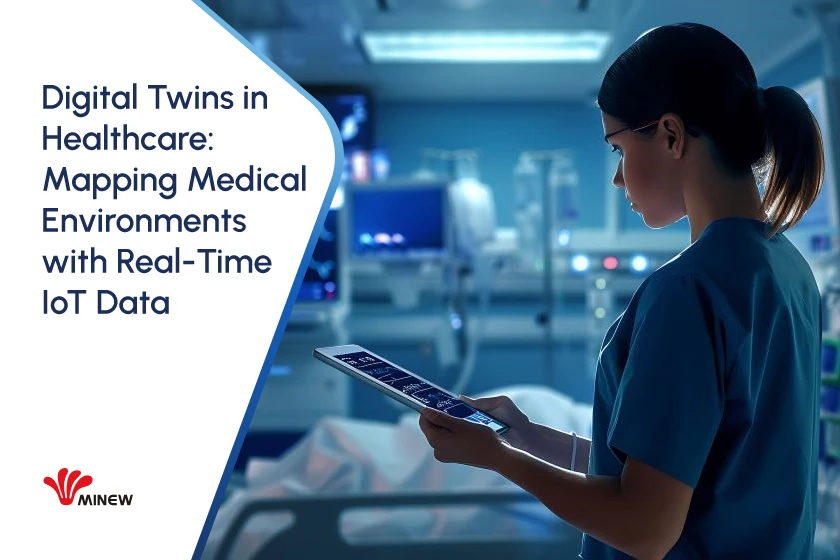
Le monde de la santé se trouve à un tournant majeur. Pendant longtemps, les soins médicaux consistaient principalement à réagir aux problèmes après qu'ils se soient produits. Aujourd'hui, nous nous dirigeons vers un avenir où nous pouvons prédire et prévenir les problèmes avant même qu’ils ne surviennent. Au cœur de ce changement se trouve une technologie puissante appelée Jumeaux numériques dans les soins de santé.
Un jumeau numérique est essentiellement une copie virtuelle d'un objet physique. Dans un hôpital, cela pourrait être une version virtuelle d'un patient, une pièce d'équipement médical, ou même tout le bâtiment. En utilisant un flux constant de données du monde réel, ces versions numériques restent parfaitement synchronisées avec leurs homologues physiques. Cela permet aux médecins et aux directeurs d'hôpitaux de tester des idées dans un espace virtuel sécurisé avant de les essayer sur des personnes ou des systèmes réels..
Comment fonctionnent les jumeaux numériques?
Pour comprendre comment cela fonctionne, considérez un jumeau numérique comme comportant trois parties principales. D'abord, il y a l'objet physique, comme un patient portant un moniteur de santé. Deuxième, il y a le modèle virtuel sur un ordinateur. Troisième, il y a la connexion de données qui les relie entre eux.
jeot sensors et jeot traqueurs attaché à l’objet physique collecte des données en temps réel et les envoie au jumeau numérique. Cela permet aux chercheurs et aux développeurs d'exécuter des simulations et de mener des expériences sans avoir besoin du dispositif physique présent toutes les secondes.. Une fois qu'un nouveau flux de travail est testé et éprouvé dans le monde virtuel, il peut être renvoyé dans le monde réel via des mises à jour ou de nouvelles instructions médicales. Ce cycle réduit les risques de tester de nouvelles idées sur des systèmes en direct.
Comprendre les jumeaux numériques dans le domaine de la santé
Dans le domaine médical, ces modèles virtuels peuvent exister à plusieurs niveaux. Les scientifiques peuvent créer des jumeaux numériques de minuscules cellules, des organes spécifiques comme le cœur, ou même tout le corps humain. Par exemple, un modèle cardiaque numérique permet aux médecins d'effectuer des simulations sur la façon dont un patient spécifique pourrait réagir à un nouveau médicament ou à une nouvelle intervention chirurgicale.
Au-delà du simple regard sur le corps, les hôpitaux utilisent également cette technologie pour modéliser leurs propres opérations. En créant une version numérique d'une clinique, les gestionnaires peuvent voir comment les patients se déplacent dans le bâtiment et où se produisent les plus gros retards.
Pourquoi choisir les jumeaux numériques dans le domaine de la santé?
Il existe plusieurs raisons impérieuses pour lesquelles les hôpitaux modernes adoptent cette technologie.
Améliorer l'efficacité des services médicaux
Les jumeaux numériques permettent aux hôpitaux de ne plus résoudre les problèmes au fur et à mesure qu’ils surviennent. Plutôt, ils peuvent utiliser « orchestration proactive » planifier à l'avance. Par exemple, l'hôpital universitaire Karolinska a utilisé cette technologie pour optimiser les flux de travail chirurgicaux. En simulant des plannings complexes, ils ont pu mieux coordonner les équipes et les équipements, ce qui a réduit les délais et aidé davantage de patients à subir une intervention chirurgicale plus rapidement.
Réduire les coûts médicaux
Les tests virtuels aident les hôpitaux à éviter des dépenses coûteuses « essai et erreur » méthodes. La recherche suggère que la mise en œuvre de jumeaux numériques peut réduire les taux de réadmission à l'hôpital jusqu'à 25% pour certaines maladies chroniques. À plus grande échelle, l’espace européen des données de santé (EHDS) estime qu’une meilleure accessibilité et efficacité des données pourrait permettre d’économiser autant 11 milliard euros dans les dix prochaines années.
Améliorer l'expérience médicale des patients
Personne n'aime attendre dans un hôpital. Les jumeaux numériques aident à résoudre ce problème en modélisant le « parcours du patient » trouver des goulots d'étranglement. Des études de cas menées dans des cliniques aux États-Unis et à Singapour ont montré que l'utilisation de données pour surveiller le flux des patients peut réduire les temps de cycle de 71 minutes à moins de 60 minutes. Cela a conduit à une énorme augmentation de la satisfaction des patients, avec « soins en temps opportun » les notes augmentent de 82% à 95%.
Améliorer l’efficacité de la gestion dans les hôpitaux
Dans de nombreux hôpitaux, la direction s'appuie toujours sur des données manuelles et sur l'expérience, ce qui peut conduire à des conjectures inefficaces. Les jumeaux numériques changent la donne en créant un système en boucle fermée pour la modélisation et l'action. En construisant une réplique virtuelle de l'ensemble de l'installation, les administrateurs peuvent simuler de nouveaux flux de travail cliniques ou des exercices d'urgence dans un environnement sans risque. Cela permet de tester et de vérifier les décisions avant qu'elles ne soient appliquées au monde réel., réduisant considérablement les coûts d’essais et d’erreurs. En outre, les jumeaux numériques offrent une vision globale de la performance hospitalière, de la consommation d'énergie à l'état des équipements. Quand ces modèles sont alimentés par des données en temps réel, la direction bénéficie d’une visualisation 3D de l’ensemble de l’infrastructure. Cela garantit que la main d'œuvre, équipement, et les médicaments sont toujours adaptés efficacement aux besoins des patients.
Naviguer dans la transformation numérique: Le rôle de Minew en tant que système de soins de santé intelligent P.unrtner
Pour qu’un jumeau numérique soit précis, il a besoin de données de haute qualité provenant du monde physique. C'est là que la couche matérielle devient vitale. Mines est un innovateur de confiance dans la technologie sans fil depuis 2007, fournir les trackers, Mots clés, capteurs, et des passerelles qui font office de « les yeux et les oreilles » pour les jumeaux numériques.
Minew propose une large gamme d'outils conçus pour les environnements de soins de santé intelligents. Par exemple, Passerelle PoE rechargeable MG4 et Passerelle MG8 Micro-USB LTE servir de ponts sécurisés. Ces appareils collectent les données des capteurs et les envoient vers le cloud à l'aide de protocoles cryptés pour protéger les informations des patients.
Du côté des patients, des outils comme Bouton d'urgence intelligent B10 et Bracelet bouton B7 permettre 24/7 surveillance. Si un patient a besoin d'aide, un simple clic met à jour le système, permettant au personnel de répondre immédiatement en fonction de la localisation en temps réel du patient. Pour les actifs hospitaliers, Minew MBT02 Bluetooth LE Connectable Asset Tag et Capteurs de température S1 veiller à ce que les équipements coûteux et les médicaments sensibles soient toujours conservés dans de bonnes conditions. Ces solutions matérielles fournissent la base de données fiable qui rend possible les jumeaux numériques dans le domaine de la santé..
Conclusion
Alors que nous regardons vers 2026, le rôle des jumeaux numériques ne fera que croître. Les hôpitaux qui adoptent cette technologie seront en mesure de développer continuellement leur expertise, apprendre de chaque quart de travail et de chaque patient. En combinant la précision du machine learning avec l’expérience pratique du personnel infirmier et médical, les jumeaux numériques reflètent le fonctionnement réel d'un hôpital spécifique.
Cette technologie nous fait avancer vers un monde de médecine P4: prédictif, préventif, personnalisé, et participatif. Qu'il s'agisse de réduire les temps d'attente ou de prédire le meilleur traitement pour une maladie cardiaque, les jumeaux numériques rendent les soins de santé plus intelligents, plus rapide, et plus humain.
 Discuter maintenant