


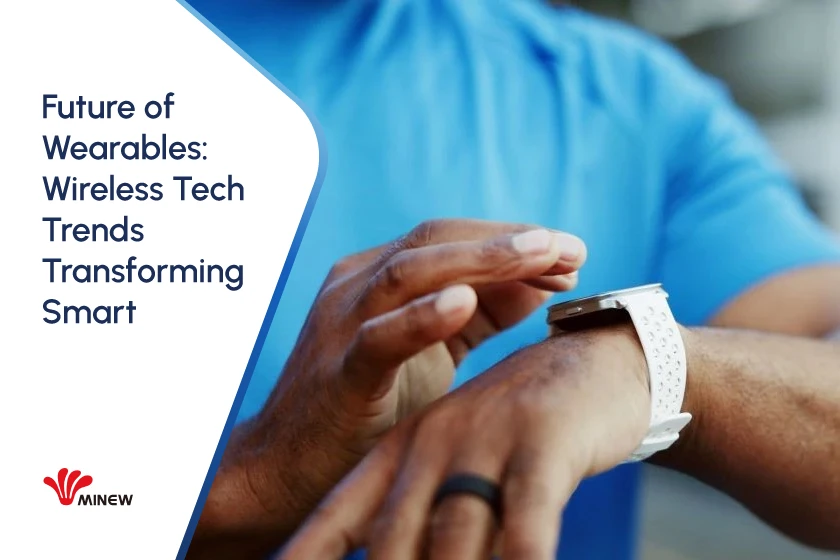
Introduction: From Fitness Tracking to a $168B Clinical Infrastructure
One of the most defining wearable technology trends in 2026 is the transition from simple fitness tracking to a critical pillar of clinical infrastructure, a market shift now valued at over $168 billion. This evolution is driven by a technical trifecta: advanced biosensors and connected devices for high-fidelity data capture, Edge AI for real-time signal processing, and Bluetooth 6.0 for reliable connectivity. Not only in smart healthcare, these innovations enable the “Hospital-at-Home” model by delivering compliant, diagnostic-grade insights directly from the edge. By integrating sub-meter positioning accuracy for emergency response and ensuring continuous data streams, these tools allow healthcare providers to extend clinical oversight into residential settings. This ensures patient outcomes are no longer dependent on periodic check-ups but are managed through proactive, real-time intervention, significantly reducing the burden on physical hospital facilities.
Anatomy of a Modern Medical IoT System
A modern medical IoT system consists of a multi-layered architecture that includes high-precision sensors and other connected IoT devices, low-latency connectivity, and localized data processing. This structure is designed to minimize the time between data collection and clinical action.
Hardware Layer: Multi-Modal Sensing & Versatile Form Factors
Modern medical IoT hardware is no longer limited to wrist-worn devices. To ensure maximum patient compliance and 24/7 safety, the industry has shifted toward a multi-modal approach:
Clinical Biosensors: High-fidelity patches for ECG and Continuous Glucose Monitoring (CGM) provide deep physiological insights.
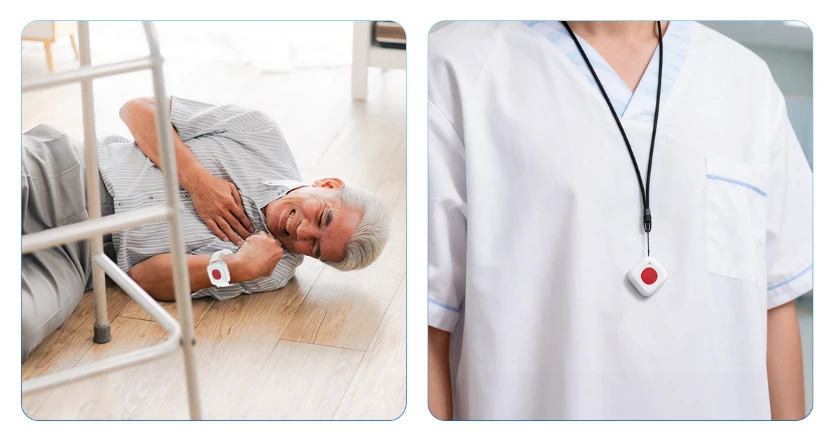
Active Safety Wearables (SOS Buttons): Unlike generic trackers, these are purpose-built for crisis intervention. To accommodate different mobility needs and ensure they are always within reach, wearable SOS buttons offer versatile wearing options, including pendants, wristbands, and clothing clips. This variety is a direct solution to the common clinical pain point of patients abandoning devices that are uncomfortable or stigmatizing.
Non-Contact Sensing (mmWave): Complementing wearables, Millimeter Wave (mmWave) technology acts as an ambient sensing layer. It monitors respiratory care and sleep patterns through high-frequency electromagnetic waves without requiring any physical skin contact, filling the data gap when a patient is not wearing a device.
Connectivity Layer: The Multi-Protocol Clinical Grid
The connectivity layer in 2026 is no longer a single pipeline; it is a redundant, multi-protocol grid designed to ensure zero-latency data flow and precise spatial awareness.
Bluetooth 6.0 Channel Sounding (The Precision Standard): It is the definitive 2026 standard for indoor positioning. By delivering sub-meter accuracy, it provides the “Location Context” necessary for clinical action. This ensures that when a wearable is triggered, response teams receive exact floor-level coordinates, effectively eliminating search time during a crisis.
Wi-Fi 6E / 7 (High-Throughput Backbone): To handle the massive data streams from continuous ECG or high-resolution bio-integrated patches, healthcare facilities utilize the 6GHz spectrum. This provides the “Fat Pipe” needed to move localized Edge AI results to the hospital’s central Electronic Health Records (EHR) without congesting the guest network.
Matter & Thread (Standardized Interoperability & Network Resiliency): To unify the “Hospital-at-Home” ecosystem, Matter provides a standardized application layer that ensures interoperability between diverse medical hardware brands. Running on Thread, these devices form a low-power, self-healing mesh network. Unlike traditional star topologies, this architecture eliminates single points of failure; if a primary border router goes offline, life-safety devices, such as wearable SOS buttons, automatically reroute signals through neighboring nodes to an active secondary border router, ensuring uninterrupted cloud connectivity.
Private 5G / RedCap (Campus-Wide Mobility & Concurrency): Optimized for large-scale campus deployments and high mobility, 5G RedCap (Reduced Capability) provides a cost-effective solution for connecting thousands of low-power wearables simultaneously. It ensures consistent connectivity for patients and staff moving between buildings or across outdoor facility grounds, providing a secure, dedicated frequency for life-safety triggers.
The Software Layer: Edge Intelligence
Edge AI is the practice of processing data directly on the wearable device or a local gateway rather than sending all raw data to the cloud. This reduces “data noise” and latency. For example, an Edge-enabled wearable can detect an irregular heart rhythm and trigger an alert instantly, rather than waiting for a remote server to process the signal.

Strategic Use Cases: From Wards to Residential Care
Driven by the latest trends in wearable technology, IoT solutions are now being deployed across the entire healthcare continuum to solve specific operational pain points.
The Smart Nursing Home
In residential care, automated fall detection is now paired with discrete SOS buttons. To accommodate different lifestyle preferences, these buttons are designed with diverse wearing options. An active resident might prefer a belt clip, while someone with limited dexterity may find a pendant or wristband more reliable. This variety ensures that the safety device is actually worn, solving the common problem of patients leaving their alarms on a nightstand.
Remote Patient Monitoring (RPM)
For chronic diseases like diabetes and hypertension, 2026 wearables allow for near-zero patient intervention. Data is automatically encrypted and sent to the provider’s dashboard, strictly adhering to HIPAA data protection standards. This ensures that the patient does not need to manually log data or navigate complex smartphone apps, which is a major barrier for elderly users.
Hospital Asset and Staff Workflow
Wearables are also protecting those who provide care. In high-risk psychiatric or emergency wards, staff are equipped with wearable distress triggers like location badges with panic buttons. These devices allow nurses to call for security or medical assistance silently and instantly, with the system providing the exact room number of the incident via the Bluetooth 6.0 positioning network.

Critical Challenges in Medical IoT Implementation
Despite the advancements, three major challenges remain for healthcare administrators in 2026: interoperability, security, and data overload
Interoperability and FHIR Standards
The biggest hurdle is integrating hardware from various vendors with legacy Electronic Health Record (EHR) systems. To solve this, the industry has standardized on the Fast Healthcare Interoperability Resources (FHIR) protocol. This allows data to flow seamlessly from a wearable device into a hospital’s primary database without manual entry.
Security and Data Integrity
To comply with the strict data privacy standards of the latest HIPAA regulations, modern medical IoT networks are increasingly adopting Zero Trust architecture. This means every device must be continuously authenticated, and data must be encrypted both at rest and in transit using Multi-Factor Authentication (MFA) for any administrative access. This prevents “man-in-the-middle” attacks that could compromise patient vitals.
Converting Data into Actionable Insights
The sheer volume of data generated by thousands of 24/7 monitors can overwhelm clinical staff. The solution is the use of “Exception-Based Reporting.” Instead of showing a doctor every heartbeat, the system only alerts them when the data deviates from the patient’s established baseline.
Roadmap: Implementing a Scalable Wearable Solution
For organizations looking to deploy these technologies, a structured roadmap is essential for clinical success.
- Objective Alignment: Defining clear KPIs dictates your technical architecture: reducing re-admissions requires investing in home monitoring for long-term trends, while improving fall response times demands high-precision indoor positioning and real-time edge alerts.
- Infrastructure Assessment: Evaluate your facility’s network density. High-precision positioning requires a specific layout of Bluetooth gateways to support massive IoT concurrency.
- Regulatory Clearance: Ensure all hardware meets 2026 FDA or CE medical certification requirements. Using non-certified hardware for clinical decisions creates significant legal and safety risks.
- Pilot and Scale: Start with a single ward or a small group of high-risk patients. Validate the workflow, ensure the staff is comfortable with the alert system, and then move to facility-wide deployment.
Minew’s Integrated Healthcare IoT Ecosystem: From Strategy to Scale
Partnering with established IoT innovators is critical for navigating this complex landscape. Industry leaders like Minew offer comprehensive hardware ecosystems, ranging from personnel safety wearables to high-precision asset trackers, that are purpose-built for clinical environments. By integrating Minew’s certified hardware solutions, healthcare providers can ensure the reliability and scalability required for modern digital health infrastructures.
Conclusion
In 2026, wearable technology is a medical necessity rather than a luxury. The convergence of the human body and digital diagnostics has reached a point where continuous monitoring is the expected standard of care. By utilizing high-precision hardware like Bluetooth 6.0 SOS buttons and adhering to the latest HIPAA and FDA standards, healthcare providers can ensure a safer, more efficient, and more responsive medical environment.
 Chat now