
Recent cyberattacks targeting supermarket refrigeration systems across Europe have raised serious concerns about food safety, cold chain reliability, and the security of connected equipment.
De acordo com The Guardian on November 2, 2026, supermarket chains in several European countries, including Sweden, Bélgica, Luxemburgo, Finlândia, Irlanda, and Estonia, reported refrigeration disruptions. In some affected stores, freezer temperatures reportedly soared to as high as 50°C (122°F), resulting in significant food losses.

These incidents highlight a critical vulnerability in modern retail infrastructure: When a refrigeration control system is compromised, how can businesses independently verify that their stored food remains at a safe temperature?
For supermarkets, food retailers, and cold chain operators, independent temperature monitoring is no longer simply an operational convenience. It is an important part of risk management, food safety, and business continuity.
1. Independent Temperature Monitoring: A Second Line of Defense
Traditional refrigeration systems rely on built-in controllers to regulate and monitor internal temperatures. No entanto, when these connected control systems are compromised, their temperature readings may not provide sufficient independent verification of actual storage conditions.
An independent third-party temperature monitoring system offers an additional layer of visibility.
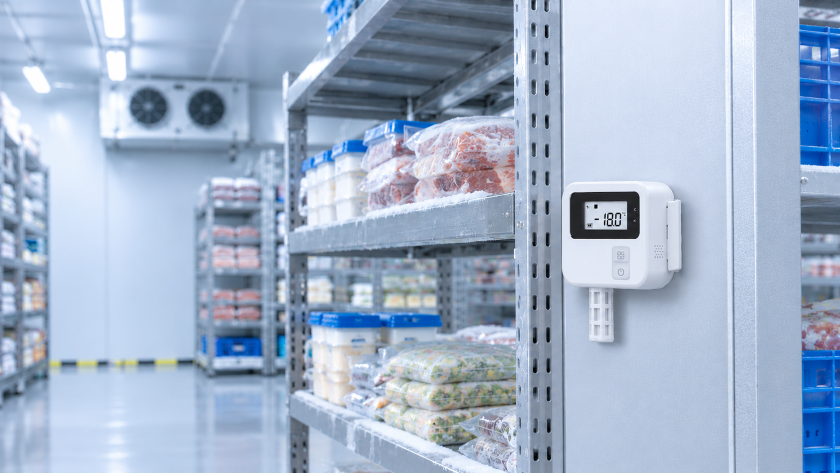
By installing Bluetooth temperature and humidity sensors inside refrigerators, freezers, and cold storage areas, businesses can collect environmental data independently of the refrigeration control system.
This approach provides several key benefits:
- Independent Temperature Verification: Obtain temperature readings from a separate sensing device rather than relying solely on the refrigeration controller.
- Early Anomaly Detection: Monitor temperature changes continuously and identify deviations from predefined thresholds.
- Timely Alerts: Send abnormal temperature notifications through connected gateways and management platforms, enabling staff to investigate and respond promptly.
- Continuous Monitoring Visibility: Maintain a separate source of environmental data even when the refrigeration control system experiences disruptions, provided the independent monitoring infrastructure remains operational.
Mais importante, independent monitoring creates a separate record of what actually happened inside a freezer or cold storage area, helping businesses identify discrepancies between refrigeration system settings and real environmental conditions.
2. Isolated Bluetooth Communication with AES Encryption
Temperature monitoring should not introduce unnecessary cybersecurity risks.
Unlike internet-connected refrigeration controllers that may be remotely accessible, Minew Bluetooth temperature and humidity sensors communicate through short-range Bluetooth Low Energy (BLE) tecnologia.
This enables a separate wireless monitoring layer that operates independently of the refrigeration equipment’s control network.
Key security advantages include:
Isolated Short-Range Communication
BLE communication provides a localized wireless network for collecting temperature and humidity data without requiring each sensor to establish a direct internet connection.
AES-Encrypted Data Transmission
AES encryption adds a layer of protection to transmitted sensor data, helping prevent unauthorized parties from accessing or interpreting monitoring information.
By separating environmental monitoring from refrigeration control and minimizing remote access capabilities, businesses can reduce unnecessary network exposure and strengthen their overall cold chain monitoring architecture.
3. One-Way Data Transmission Without Remote Configuration Access
A key security consideration is whether a monitoring device can receive external commands.
Minew Bluetooth temperature and humidity sensors can use transmit-only Bluetooth advertising configurations, in which sensors broadcast environmental readings to nearby gateways without accepting remote commands through the monitoring network.
This communication model eliminates the inbound network command channel that could otherwise be used to remotely modify sensor readings or settings.
It also helps keep temperature monitoring separate from the remote control functions of refrigeration equipment.
By minimizing remote access capabilities and maintaining one-way data transmission, businesses can reduce potential attack surfaces and add another layer of protection to their cold chain monitoring infrastructure.
4. Reliable Monitoring in Demanding Cold Storage Environments
Cold storage environments place specific demands on monitoring devices. Sensors must operate reliably over extended periods while exposed to low temperatures, umidade, condensation, and frequent environmental changes.
Minew Bluetooth temperature and humidity sensors are designed with practical features to support long-term deployment:
- Consumo de baixa potência: Energy-efficient operation supports extended battery life, reducing maintenance frequency and battery replacement costs.
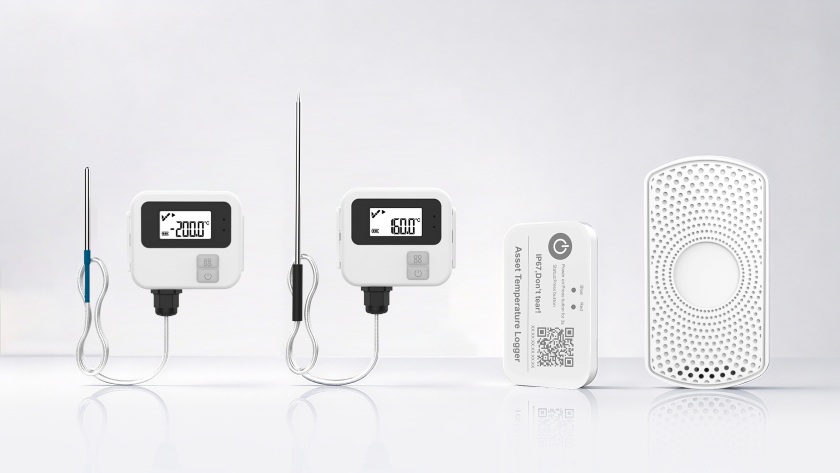
- IP67-Rated Protection: A high level of enclosure protection against dust ingress and temporary water immersion, making the sensors suitable for demanding monitoring environments.
- Monitoramento de temperatura e umidade: Track both environmental parameters to provide a more comprehensive view of storage conditions.
- Stable Long-Term Operation: Designed to maintain reliable sensing performance within the device’s specified operating temperature and humidity ranges.
These characteristics make the sensors suitable for deployment across supermarket freezers, refrigerated display cabinets, câmaras frias, food storage facilities, and other temperature-sensitive environments.
5. Independent Data Records for Food Safety Compliance and Insurance Claims
When a refrigeration incident occurs, detecting abnormal temperatures is only part of the challenge. Businesses also need reliable records to establish when the incident happened, how temperatures changed, and how long products may have been exposed to unsafe conditions.
Without independent monitoring records, retailers may have to rely heavily on the refrigeration controller’s own data, which could be incomplete or unavailable following a system failure or cyberattack.
Minew Bluetooth temperature and humidity sensors provide an independent source of environmental data through continuous monitoring and data logging, helping businesses maintain a separate historical record of actual storage conditions.
These records can support several important business needs:
- Insurance Claims Support: Provide independent temperature records as supporting evidence when documenting refrigeration failures, food spoilage, and potential financial losses.
- Food Safety Compliance: Maintain historical temperature records for regulatory inspections, internal audits, and food safety management.
- Investigação de Incidentes: Identify the timing, duração, and extent of temperature deviations to support root-cause analysis.
- Business Accountability: Provide additional objective data when reviewing responsibility for temperature-related product losses or disputes.
For supermarkets and cold chain operators, reliable temperature records are more than operational data. They can become valuable supporting evidence when unexpected incidents lead to financial losses, insurance claims, or compliance reviews.
Build a More Resilient Cold Chain with Independent Monitoring
The recent cyberattacks across Europe are a reminder that even well-established refrigeration systems can face unexpected disruptions.
Businesses should not have to rely on a single control system to understand the actual conditions of their stored products.
By deploying independent Bluetooth temperature and humidity sensors, retailers and cold chain operators can gain an additional layer of monitoring, transmissão segura de dados, and reliable historical records to support food safety management and business risk control.
Don’t rely on a single system to protect your cold chain. Monitor independently. Record reliably. Respond proactively.
Explore Minew’s Bluetooth Temperature and Humidity Sensors and build a more reliable, seguro, and resilient cold chain monitoring system.
